
On October 30th, the Balanced Supply of Housing research team hosted a screening of Le Dernier Flip, followed by a rich panel discussion exploring alternative models for housing affordability and community ownership. The evening began with welcoming remarks from Dr. Nik Luka, who opened with a land acknowledgment and posed fundamental questions: What does home mean in today’s world? What does homelessness mean?
The Film: Flipping the Script on Real Estate
Le Dernier Flip, co-created by journalist Diane Bérard and Samuel Gervais, tackles a critical reality: the real estate sector is out of control. As the film powerfully illustrates, adequate housing lifts you up, while the lack of it drives you down.
The numbers are staggering. Housing financialization has led to more than a tripling of the average house price-to-income ratio in just one generation. Homeownership has become inaccessible for most young adults, even those earning average or above-average salaries.
The film introduces viewers to Community Land Trusts (CLTs)—mission-based organizations designed to keep land affordable in perpetuity. The filmmakers traveled to Burlington, Vermont, to meet with Bernie Sanders, the US Senator for Vermont and former Mayor of Burlington. During his time as mayor, Sanders championed CLTs as an option to keep housing viable for those being priced out of the market.
“Better to be a partial owner than a full renter,” explains Yussef, one of the film’s subjects, capturing the philosophy behind shared ownership models.
Michael from Vermont’s Champlain Housing Trust adds another crucial insight: “Affordability is created over time.” Through mechanisms that remove housing from speculative markets, CLTs build and maintain affordability across generations.
The Canadian Context
The housing crisis looks different depending on where you live in Canada, but the fundamentals remain the same. Housing is traditionally defined as affordable when it costs no more than 30% of household income. Yet in Quebec, Ontario, and BC, housing costs actually range from an average of 47-68% of income.
Vacancy rates affect rents and the broader market, but the type of housing matters just as much. There are tens of thousands of empty condos in our urban centers, but they’re not accessible to those in need. Supply alone isn’t the answer. We need the right kind of supply.
The film highlights inspiring Canadian examples of decommodified housing. Milton Parc has operated as decommodified housing through a cooperative model for over 40 years. Quebec’s owner-occupied co-ops offer another model: residents own their units but must sell them back to the co-op at 25% below market value, prioritizing community benefit over individual profit.
Social Utility Trusts: A Legal Innovation
The film introduces Social Utility Trusts (SUTs)—legal entities designed for community benefit. SUTs are unique to Quebec’s civil code. Unlike any other legal structure, you cannot change a SUT’s mission. It belongs to no one. The beneficiary, named by the trust, is society in general. SUTs protect assets from speculation and have been used successfully in conservation and agricultural contexts.
While SUTs have been less common in urban residential settings, that can change. By decommodifying housing—removing it from speculative markets—SUTs offer a path to improve long-term affordability.
Deeper Questions About Ownership
Le Dernier Flip doesn’t shy away from philosophical questions about ownership and possession. It asks us to examine our relationship with the land and with ourselves. How can we find tools for nature to belong to itself, including the land under our homes?
The film argues that we’ve lost our balance in creating society, letting the market direct where we go. But we are still capable of cultivating a better way. Collectively, we need to start thinking about limits—our limits. We’re here for 80-100 years at most. Perhaps it’s time to reevaluate our ‘need’ to possess.
As the film concludes, the ultimate, last, flip will be to remove substantial housing stock from the speculative market, ensuring it serves communities rather than investors.
Q&A with Diane Bérard
Following the film, co-writer Diane Bérard, a social finance columnist by day, fielded questions about social finance and its role in housing solutions.
On ensuring social finance continues to serve communities: Diane emphasized that there should be more social finance tools available. She highlighted the upcoming federal budget (read our key take aways from Budget 2025) and the potential for “citizen money”—community capital in the form of bonds, shares, and other investment vehicles. We should structure these for investment and provide tax credits for people investing in community capital. Currently, tax credits mostly benefit wealthy market investors. We should be able to use those same tools for community-focused investments.
On the intersection of social finance, climate, and housing: Social finance can be used to reshape cities. It should and must work alongside traditional mechanisms, but it cannot lose its focus. Social finance cannot and should not be restructured to resemble traditional finance. “Social finance cannot be traditional finance with a bigger heart,” Diane stressed. It must stay focused and include people in the process.

Panel Discussion: Researchers Weigh In
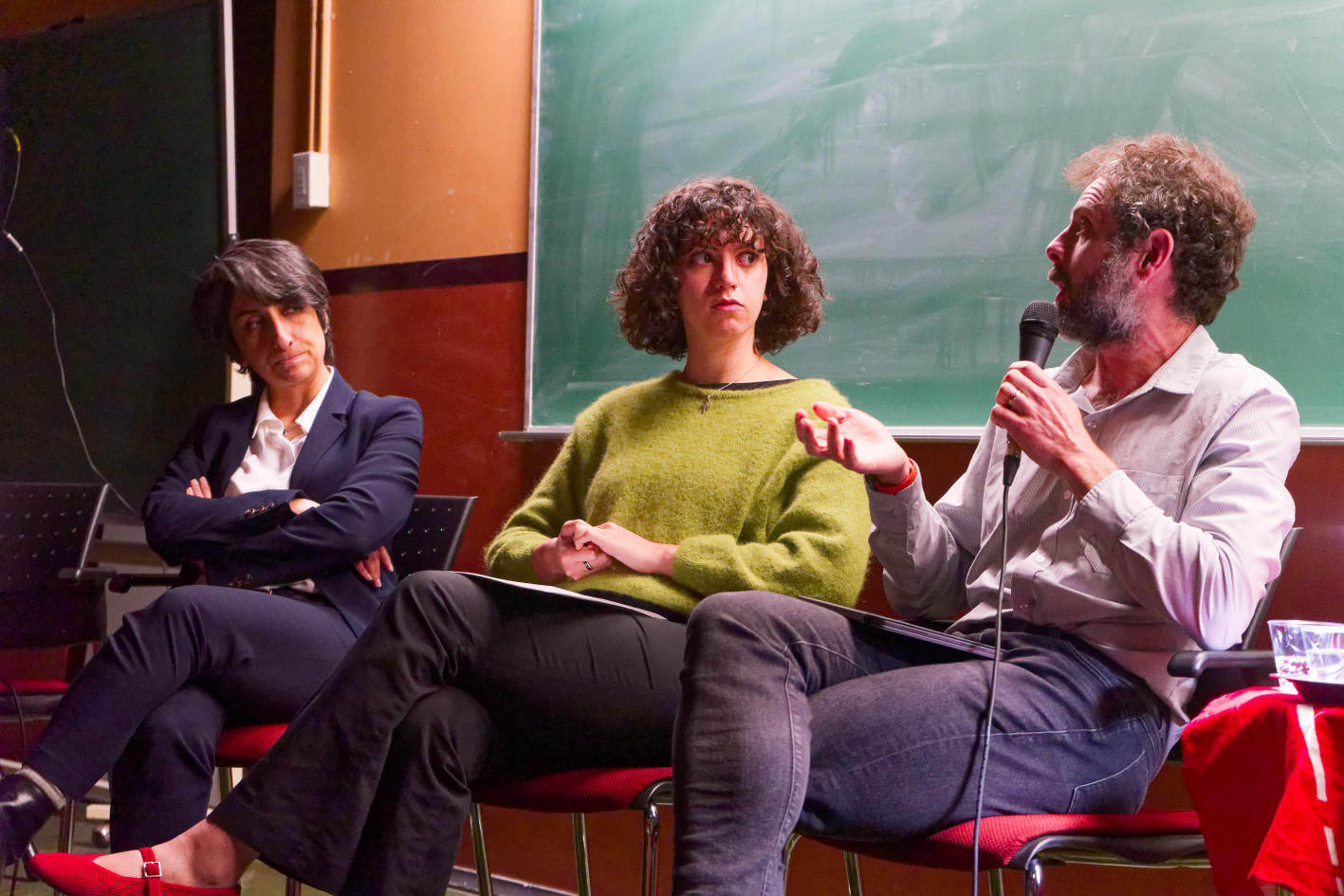
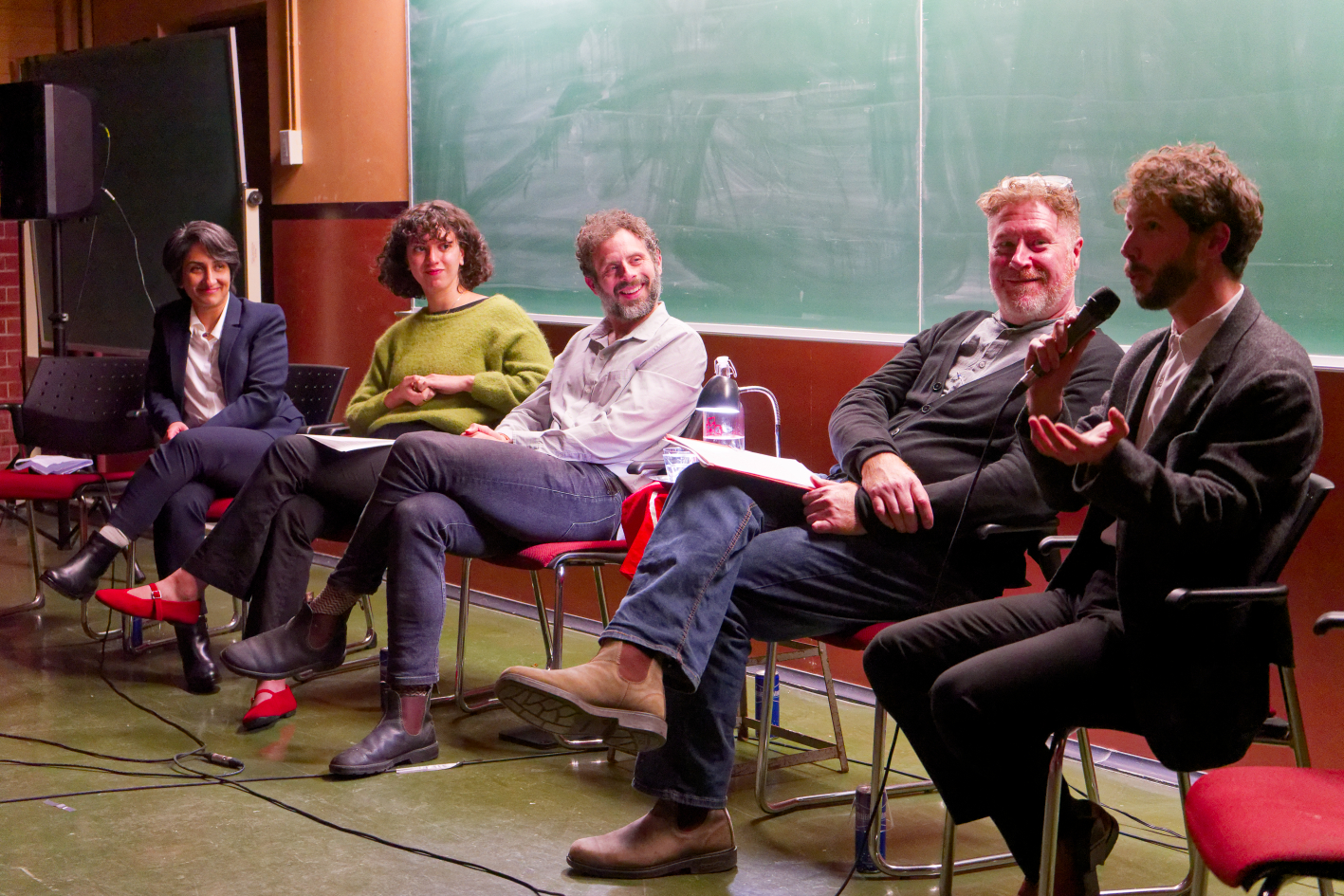
The evening continued with a panel of Balanced Supply of Housing researchers who brought diverse perspectives on financialization, urban planning, and non-profit housing:
- Adam Mongrain, Director of Housing Policy at Vivre en Ville
- Dr. David Wachsmuth, Associate Professor at McGill University School of Urban Planning and Canada Research Chair in Urban Governance
- Ines Zerrouki, Housing Policy Advisor at Vivre en Ville
- Dr. Leila Ghaffari, Assistant Professor at Concordia University
- Dr. Nik Luka, Associate Professor at McGill’s Peter Guo-hua Fu School of Architecture and School of Urban Planning
The panel discussion surfaced several critical themes connecting the film’s message to the realities of housing policy and planning in Canada and the importance of reducing barriers to non-profit solutions.
The Language We Use Matters
The conversation explored how we talk about community housing and why terminology matters. The distinction between “non-profit” and “non-market” housing carries implications for how the public understands and supports these models. Greater awareness of non-profit housing’s impact on affordability could shift how communities and policymakers prioritize these developments. As Adam Mongrain pointed out in his recent Medium piece, There is no such thing as non-market housing, a diverse, non-profit housing system is imperative.

Systemic Barriers and Opportunities
Panelists also examined the structural challenges facing alternative housing models. Municipal zoning often creates barriers for non-profit developments and innovative approaches like co-housing. The discussion emphasized the need for better coordination between different levels of government to enable these models to flourish.
Quebec’s recent decision to grant municipalities temporary power to override urban planning regulations through Article 93 sparked important debate. While municipal flexibility can help address affordability challenges, panelists cautioned about unintended consequences. Historically, planning regulations have been used to maintain prosperity for white communities while displacing people of color and Indigenous communities. As Zerrouki noted, many projects using Article 93 were already in the planning pipeline, raising questions about whether this tool is truly enabling new solutions or simply fast-tracking existing developments. The key question remains: does urban planning truly represent community needs?

Addressing Inequity and Displacement
The discussion then turned to the double-edged nature of urban policy. While policies can create space for affordable housing, they can also accelerate gentrification and displacement with racialized communities bearing a disproportionate burden. Ghaffari highlighted promising approaches, including Montreal’s affordable housing overlay, while panelists acknowledged the blind spots in existing policies and regulations that allow displacement to continue.

Confronting Financialization
Wachsmuth’s research on rental housing financialization in Montreal revealed concerning patterns affecting renters across the city. The panel explored what types of regulations might effectively limit the harms of treating housing as a financial asset rather than a human need.
Paths Forward
The panel concluded by considering which models hold the most promise for delivering a truly balanced supply of housing. From Community Land Trusts that prioritize community ownership over individual wealth accumulation, to innovative co-housing arrangements and owner-occupied cooperatives, the discussion highlighted diverse approaches. The common thread: ensuring community decision-making remains at the forefront of land-use planning, rather than allowing market forces alone to shape our cities.

Conclusion
The screening of Le Dernier Flip and the panel discussion illuminated the urgent need to reimagine our relationship with housing and property ownership. From Community Land Trusts to Social Utility Trusts, from owner-occupied co-ops to innovative policy changes, there are tools available to create a more equitable housing system.
The question is whether we have the collective will to implement them. As the film reminds us, we need to find our balance again—to recognize our limits and reevaluate our need to possess. The last flip, the most important one, will be removing substantial housing from the speculative market and ensuring it serves communities for generations to come.
The Balanced Supply of Housing is a SSHRC-CMHC funded partnership grant led by Dr. Alexandra Flynn at UBC’s Allard School of Law that focuses on land use and housing financialization across Vancouver, Toronto, and Montreal.