
Scaling Up Approaches to Participatory Co-Housing
Last modified:
This project will generate knowledge on regulatory reform, strategic planning, and financial tools to support the development of affordable co-housing in Canada, with a focus on Montreal.
Jump to Research OutputsWhat are the barriers and bridges shaping the scaling of affordable co-housing in Montreal?
This project consists of three main research streams: documenting the implementation of emblematic co-housing projects, completing comparative research on strategic approaches to cohousing internationally, and taking stock of financial tools and barriers preventing affordable co-housing models from being scaled-up and reproduced.
Project Lead(s):
Keyan Ye, Christina Mahut
Home Organization:
McGill University
Other Participants:
Community Partner:
Funding Stream:
Community-Focused Project
Project Status:
Ongoing
Background
Cohousing is a collectively designed and managed habitat in which fully private dwellings are organized around collective spaces to promote social connection and the sharing of objects and services. This project is generating knowledge on regulatory reform, strategic planning, and financial tools to support the development of affordable co-housing in Canada, with a focus on Montreal.
Methodology
First, this project documents the implementation of emblematic co-housing projects, identifying key stakeholders, citizen motivations, development costs, socio-economic impacts, participation processes, and the logistical, regulatory, and legal barriers encountered.
Second, it conducts comparative research on international co-housing models alongside the work of Village Urbain, examining strategic approaches and their applicability to the Montreal context.
Third, it assesses financial tools and barriers affecting the scalability of affordable co-housing by analyzing institutional capacity, regulatory frameworks, financial resources, and associated liabilities.
These research areas draw on case studies and interviews to document participatory processes, comparative analysis across Canadian and international contexts, and application of findings to an ongoing pilot project led by Village Urbain. The project will culminate in a ‘made-in-Montreal’ framework for co-housing and the dissemination of practical insights on how institutional conditions shape the feasibility of participatory housing models.
Results
This project has generated evidence-based outputs, including a film screening and websites documenting related projects, on the development of affordable co-housing in Canada.
Research Outputs
Existing reports, presentation materials, podcasts, webinar recordings, and research summaries.
-
Le Dernier Flip: Screening and Housing Research Panel in Montreal | October 30, 2025
Film Screening and Panel
Learn moreJoin us on October 30, 2025 for a screening of Le dernier flip, a compelling documentary on decommodifying housing, followed by a panel discussion featuring housing BSH researchers.
-
Village Urbain- Intergenerational Pavillion
Website
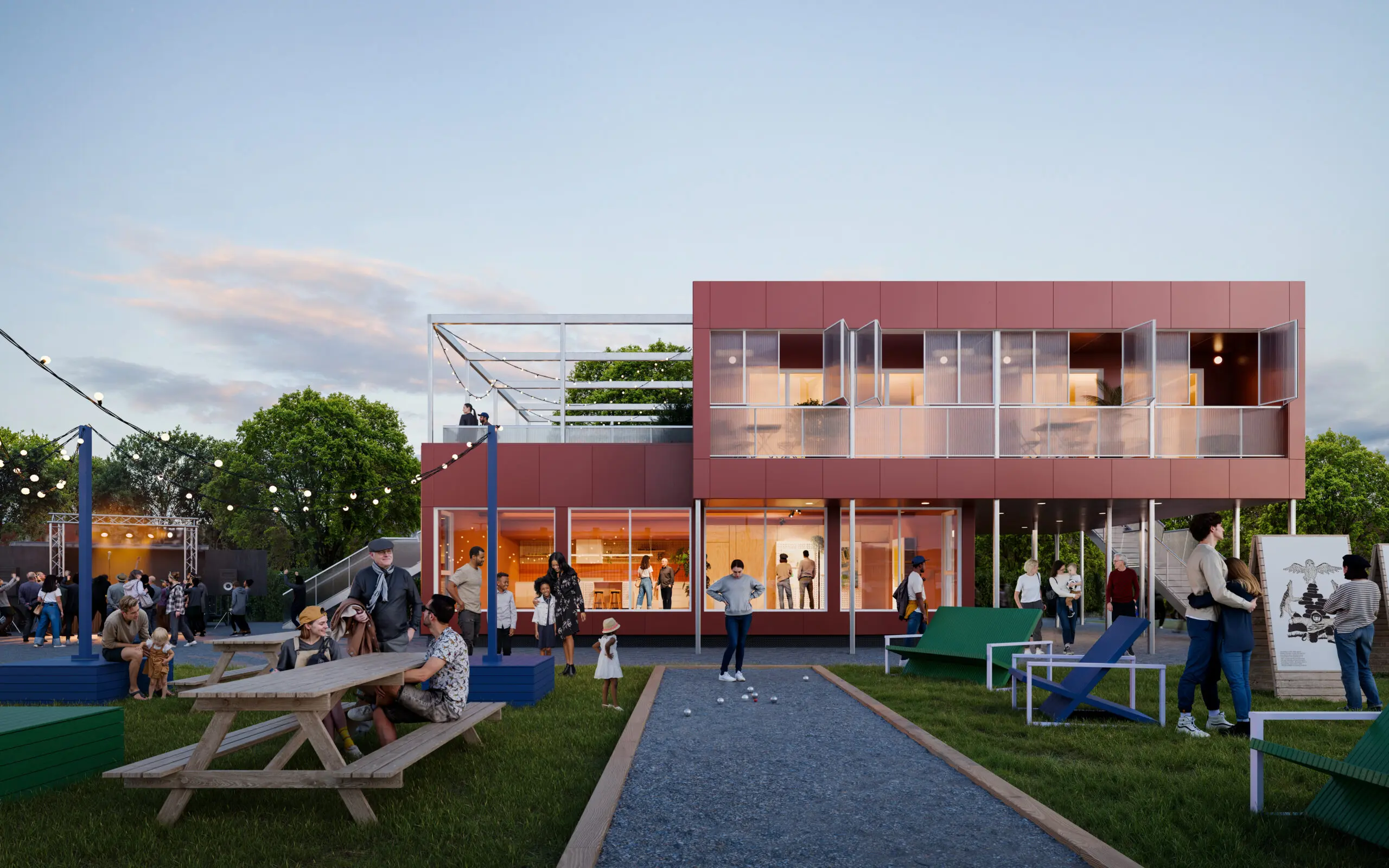
Learn moreThis research generated knowledge on regulatory reform, strategic planning, and financial tools to support the development of affordable co-housing in Canada, focusing on Montréal, helping the local non-profit developer Village Urbain to get its first major construction project underway.
-

Village Urbain- Un Village à Lachine
Website
Learn moreThis research generated knowledge on regulatory reform, strategic planning, and financial tools to support the development of affordable co-housing in Canada, focusing on Montréal, helping the local non-profit developer Village Urbain to get its first major construction project underway. See more on the project website.

Alert the presses!
This project hasn’t hit the news yet.