Policy Report and Profile Series on Canadian Community Land Trusts
Last modified:
The Policy Report and Profile Series on Community Land Trusts (CLT) will be a collection of thematic reports produced by researchers and practitioners across the country that will discuss key issues related to the development and expansion of this important and under-researched alternative land practice.
Jump to Research OutputsWhat are CLTs and how do they work in Canada?
The Policy Report & Profile Series on Community Land Trusts (CLT) will be a collection of thematic reports produced by researchers and practitioners across the country that will discuss key issues related to the development and expansion of this important and under-researched alternative land practice.
The series will be written for popular audiences including CLT practitioners, community members, students, academics and government officials. The series will be produced and disseminated in partnership with the Canadian Network of Community Land Trusts (CNCLT). Through this partnership, the CNCLT will participate in the shaping of the themes to ensure relevance to practitioners and will connect researchers to member CLTs. The series will include 2-5 Policy Papers tackling critical issues around CLT development and 2-5 shorter CLT Profiles documenting the models of particular CLTs.
Project Lead(s):
Home Organization:
University of Toronto
Other Participants:
Penny Gurstein, Kuni Kamizaki, Margaret Low, Nicolas Gazzard, Nat Pace, Jane O’Brien Davis, Meagan Auger, Tiana Lewis
Community Partner:
Canadian Network of Community Land Trusts
Funding Stream:
Comparative Project
Project Status:
Ongoing
Proposed papers
-
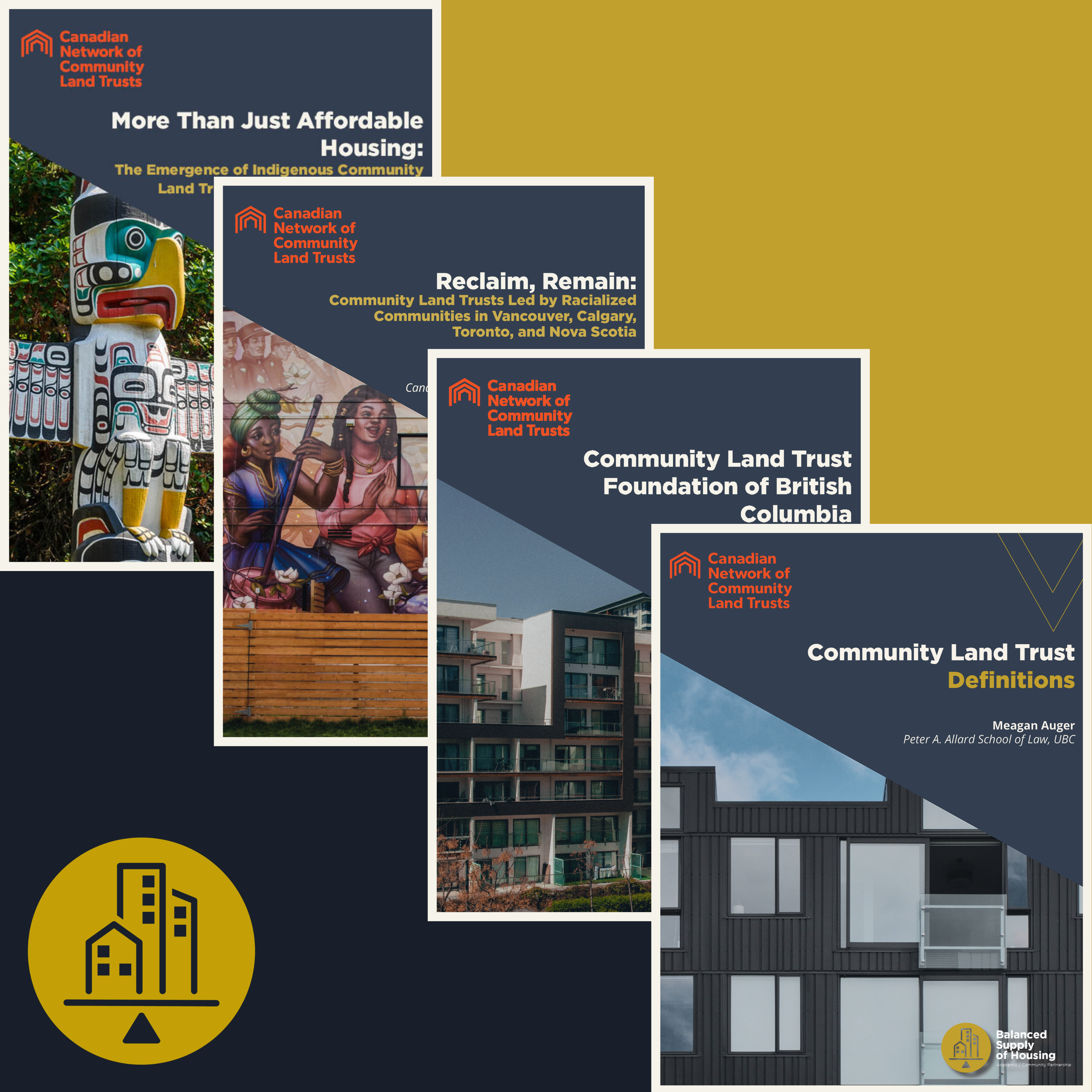
Reclaim, Remain: Community Land Trusts Led by Racialized Communities in Vancouver, Calgary, Toronto, and Nova Scotia
- Nat Pace and Jane O’Brien Davis, Canadian Network of Community Land Trusts
-
CLT Definitions Report
- Meagan Auger, Peter A. Allard School of Law, UBC
-
More Than Just Affordable Housing: The Emergence of Indigenous Community Land Trusts, Land Back, and Healing
- Margaret Low and Tiana Lewis, School of Regional and Urban Planning, UBC
-
Community Land Trust Foundation of British Columbia (CLTFBC) Case Study
- Penny Gurstein, Professor Emeritus, UBC
-
Gentrification and the Role of CLTs in Protecting Affordability
- Susannah Bunce, School of Cities, University of Toronto
-
Successful and Promising Use Case Study 1
- Nicholas Gazzard, Public Policy Consultant
-
Successful and Promising Use Case Study 2
-
Kuni Kamizaki, School of Regional and Urban Planning, UBC
-
Kuni Kamizaki, School of Regional and Urban Planning, UBC
Research Outputs
Existing reports, presentation materials, podcasts, webinar recordings, and research summaries.
-
Preserving a Home, Protecting a Community: How Kensington Market CLT Secured Affordable Housing
Blog Post
Learn moreRead how BSH community partner, Kensington Market Community Land Trust, is preserving affordable housing in Toronto and building community power through the CLT model.
-
Research in Progress on BIPOC CLTs and Resisting Gentrification
Research in Progress Webinar
Learn moreWatch a recording of BSH’s Research in Progress webinar on BIPOC-led CLTs and Resisting Gentrification.
-
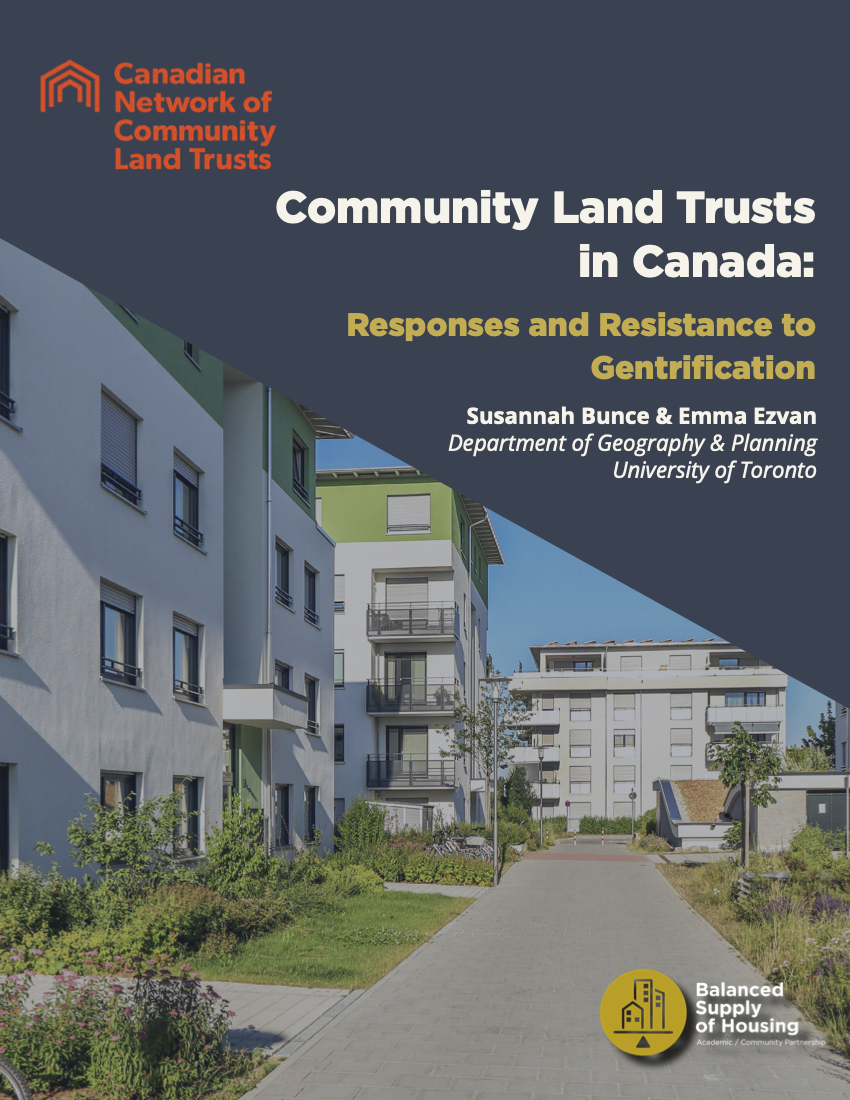
Responses and Resistance to Gentrification
Report
Learn moreThis report examines how Canadian Community Land Trusts (CLTs) resist gentrification by decommodifying land, promoting community ownership, and ensuring long-term affordability, countering the displacement and transformation caused by profit-driven development.
-
New Insights into Canadian Community Land Trusts: A Research Paper Series
Blog post
Learn moreDeveloped in partnership with leading academics and practitioners across Canada, this six-part series is the first of its kind and provides critical insights into the principles, practices, and challenges of CLTs in Canada.
-
Episode 9: Preserving Community
Podcast
Learn moreHow can ownership over land help preserve our diverse communities?
-
2024 CLT Summit
Summit Presentation
Learn moreFour papers from this series were presented at the 2024 CLT Summit in Vancouver.
-
Community Land Trust Foundation of British Columbia
Case Study
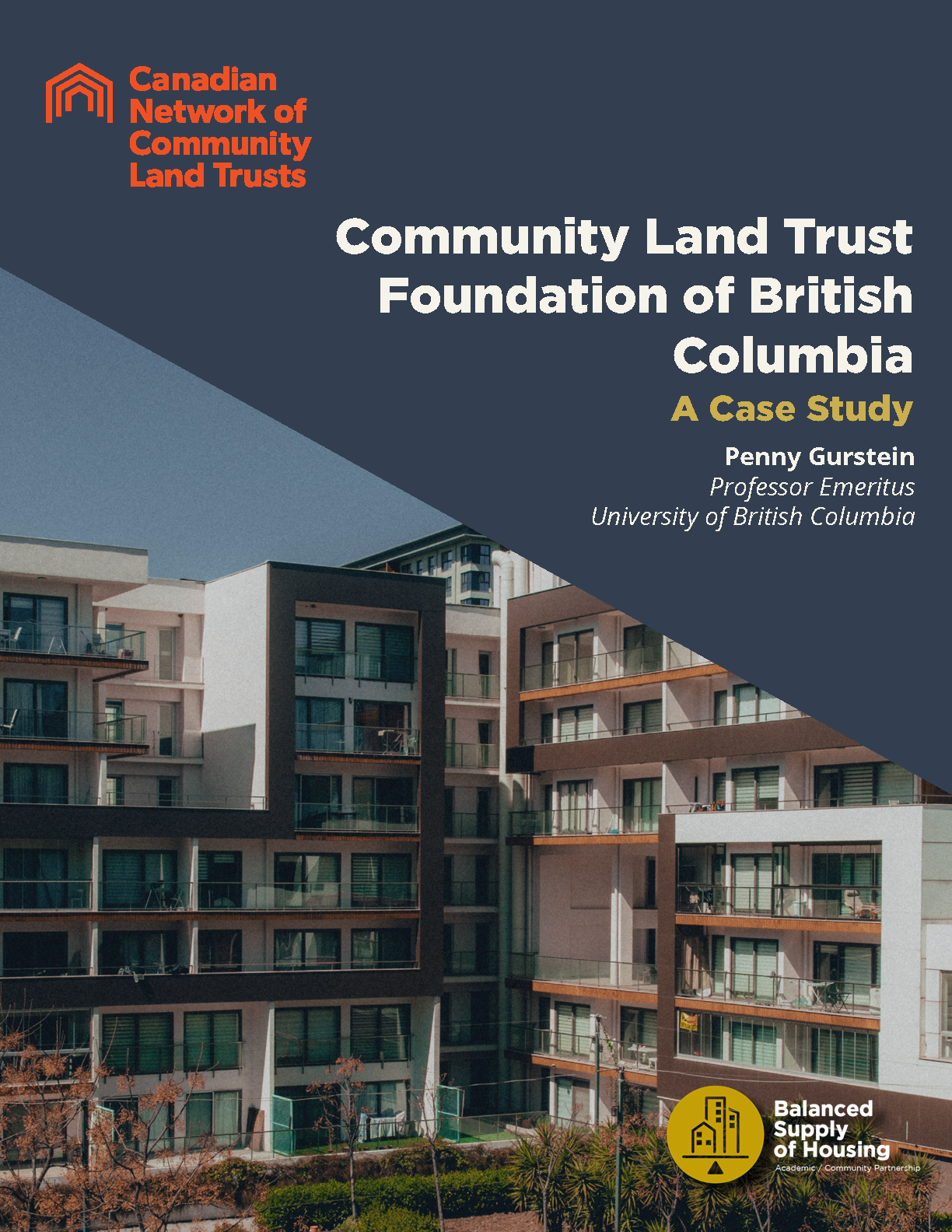
Learn moreThis case study aims to explore the unique structure and impact of the Vancouver-based Community Land Trust Foundation of British Columbia (CLTFBC) which leverages a community land trust (CLT) model as a tool to operate housing co-ops.
-
More Than Just Affordable Housing
Report
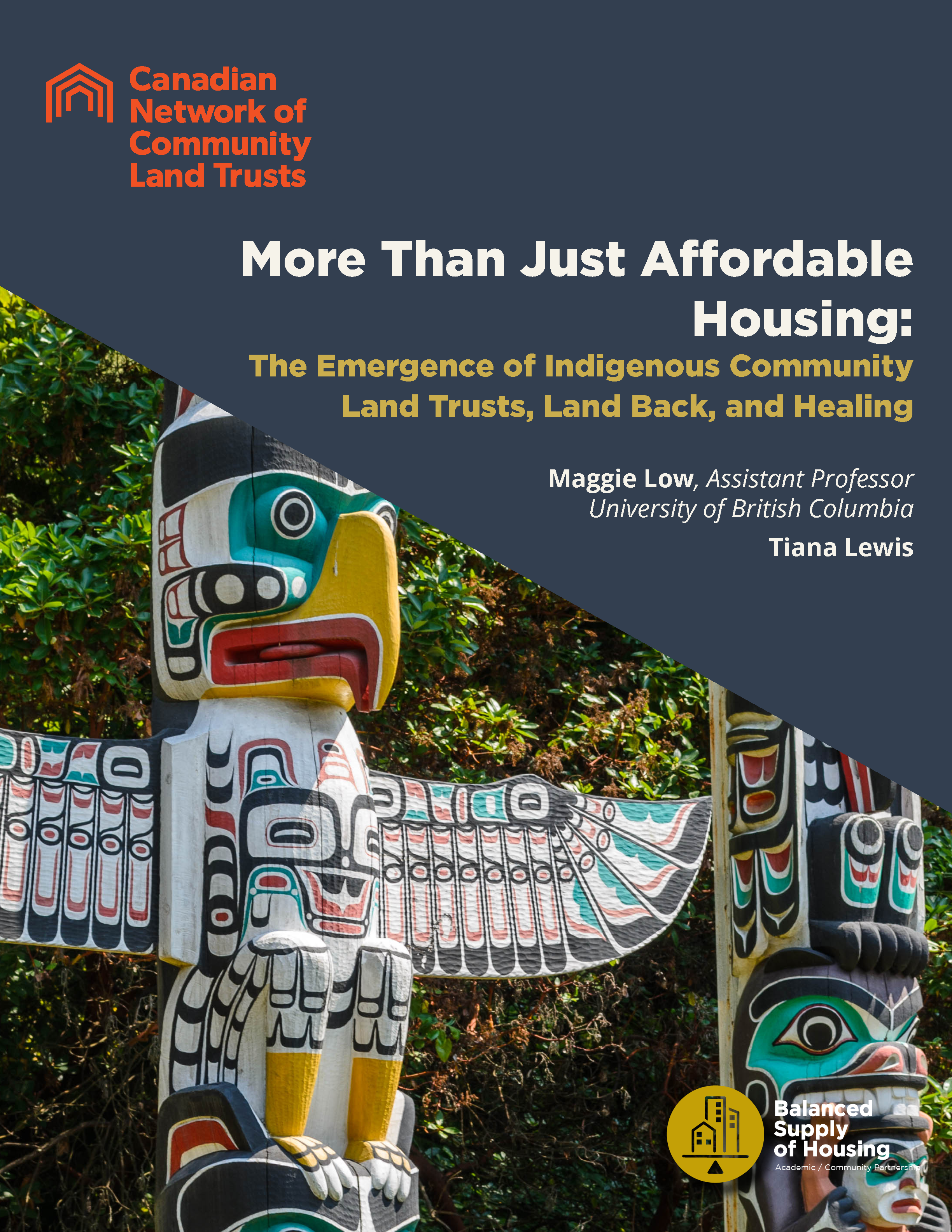
Learn moreThe purpose of this report is to illuminate the innovations of and challenges for Indigenous community land trusts (ICLTs) in Canada and articulate ways community land trusts (CLTs) can foster better working relationships with Indigenous Peoples, Nations, and organizations.
-
Reclaim, Remain
Report
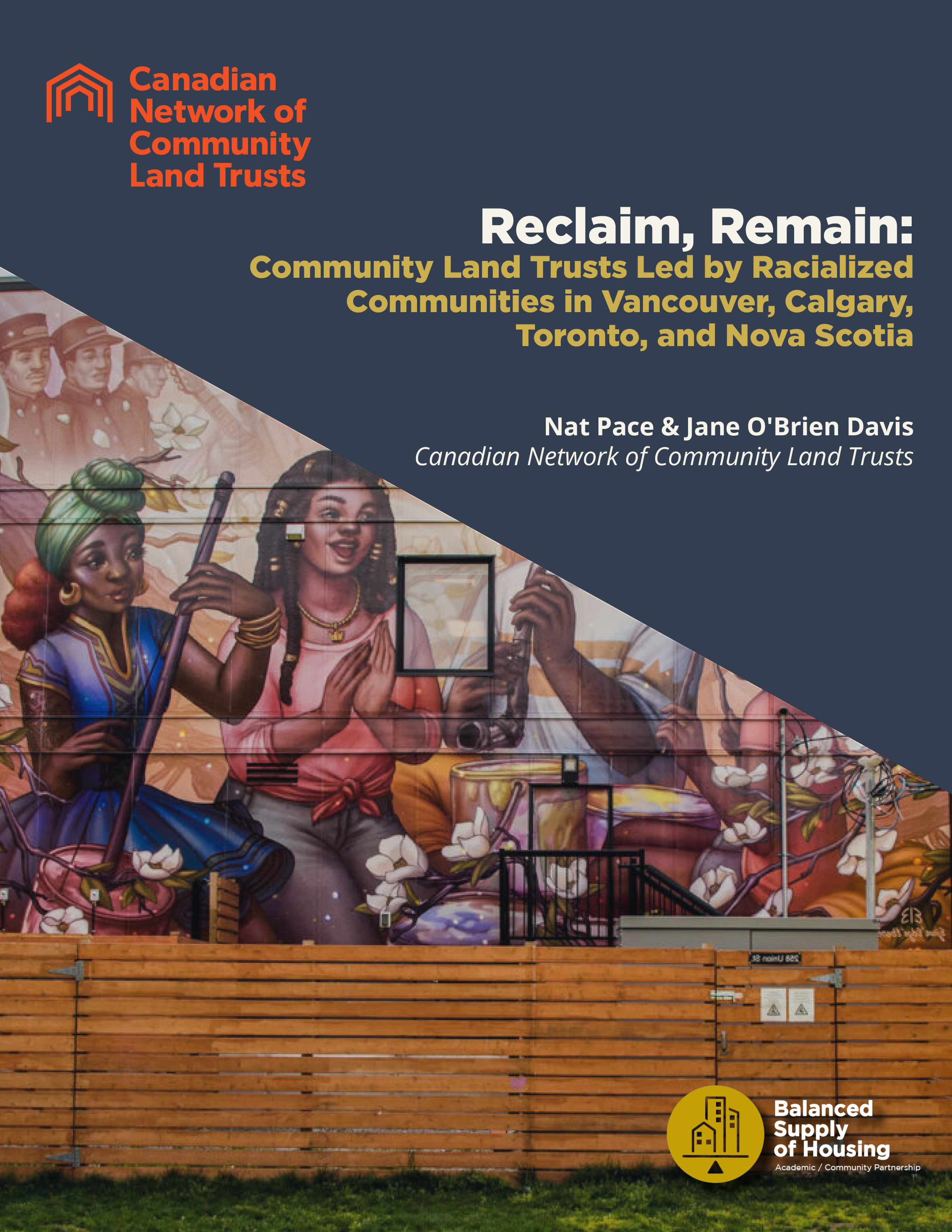
Learn moreThis paper provides an overview of six BIPOC-led CLTs in Canada and highlights their potential for broader community impact through collective land stewardship and land use practices. Though in their early stages of organizing, these projects are trailblazing in a growing movement of sustainable and enduring communities. Written by Nat Pace and Jane O’Brien Davis…
-
CLT Definitions
Report
Learn moreThis paper examines the legal definitions of CLTs worldwide to inform the possible development of a legal definition for CLTs in Canada and how a legal definition might impact their work at the community level. Written by Meagan Auger, J.D. from the Peter A. Allard School of Law at UBC.



Alert the presses!
This project hasn’t hit the news yet.