From the hypothetical to the material: Triangulating popular, professional, and political views on medium-density co-housing
Last modified:
This action-research project will generate new knowledge on perceptions of medium density, non-profit housing in suburban neighbourhoods through a modular cohousing prototype.
Jump to Research OutputsHow do suburban neighbourhoods perceive non-profit housing?
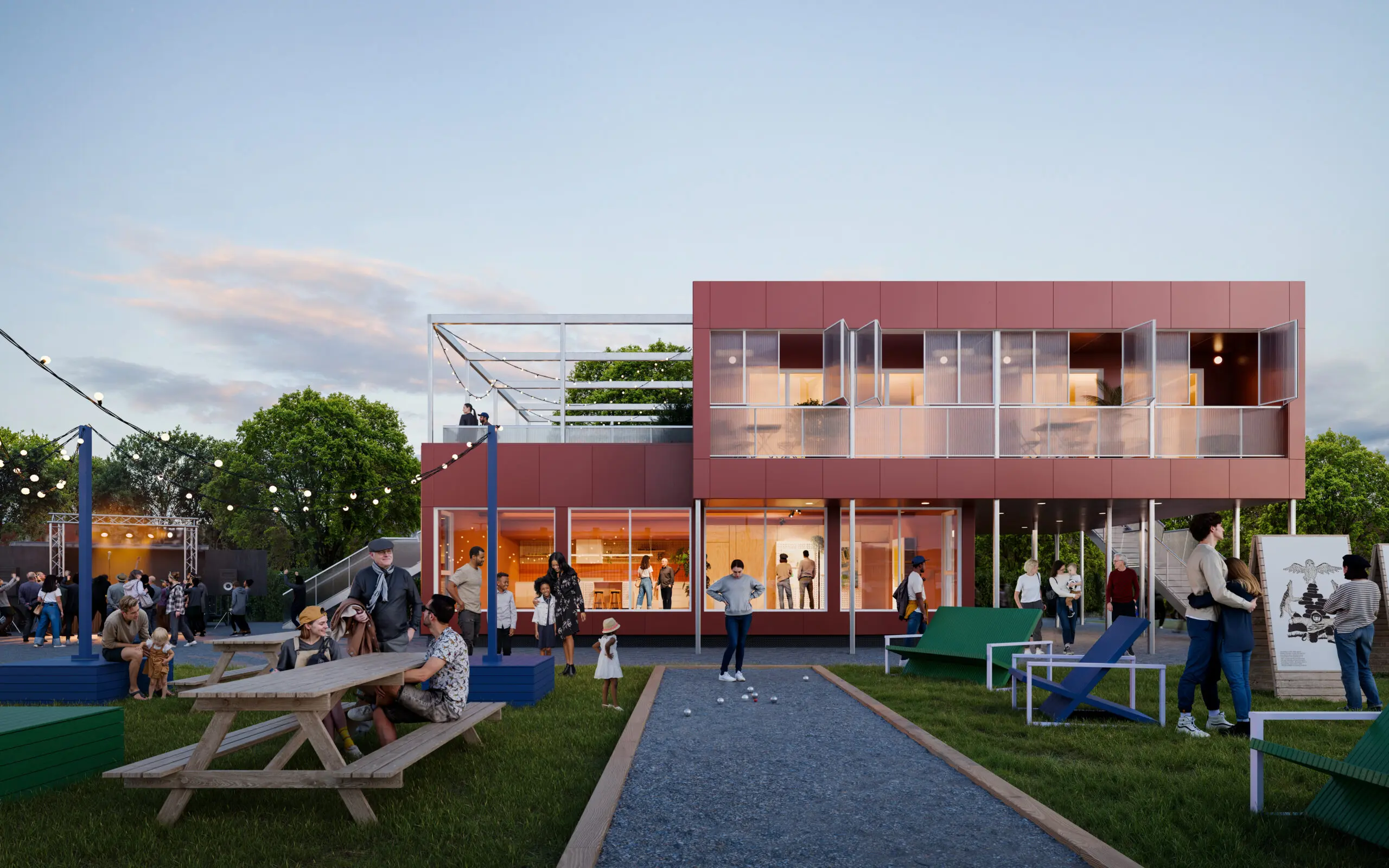
This action-research project will generate new empirical data on popular perceptions of medium density, non-profit housing in suburban neighbourhoods. Through a collaboration with the non-profit developers Échelle Abordable and Village Urbain, a real-world prototype of modular cohousing will be built in Laval, a suburb of Montréal. The prototype will be used as a participatory showcase to test social acceptability and dispel myths about non-profit housing. This project will mobilize findings from previous BSH funded research on scaling up approaches to participatory co-housing, while also developing insight into how innovative and responsive land practices can become more feasible in Canadian metropolitan areas.
Project Lead(s):
Home Organization:
McGill University
Community Partner(s):
Funding Stream:
Comparative Project
Project Status:
Ongoing
Methodology
This project involves using a modular cohousing prototype to engage diverse publics and key stakeholders through guided tours, workshops, charrettes, and other events, as well as in the prototype production process. Alongside enabling Montréal CMA residents to directly experience the cohousing prototype, carefully-calibrated questions and CMA-specific visualisations will be added to online questionnaires being rolled out in Ottawa, Toronto, Vancouver, and Montréal to gauge popular attitudes toward medium-density mixed housing in existing neighbourhoods. This questionnaire is part of the BSH funded project Moving Forward on the Missing Middle.
Research Outputs
Existing reports, presentation materials, podcasts, webinar recordings, and research summaries.
-
Village Urbain- Intergenerational Pavillion
Website
Learn moreThis research generated knowledge on regulatory reform, strategic planning, and financial tools to support the development of affordable co-housing in Canada, focusing on Montréal, helping the local non-profit developer Village Urbain to get its first major construction project underway.