
On a sunny morning in Vancouver, a group of community organizers, housing advocates, and non-profit leaders gathered around a simple question:
How can communities take control of land and housing for the long term?
For many, the answer lies in Community Land Trusts (CLTs)—non-profit and community-run organization that own, develop and manage land and buildings to benefit the local community. While CLTs are relatively new in Vancouver, Toronto has been building a strong movement for years. One of its leaders, the Parkdale Neighbourhood Land Trust (P/NLT), now owns more than 200 affordable rental homes in the city’s west end.
P/NLT knows what it takes to grow. Since its first acquisition in 2019, it has developed tools and strategies to move buildings into community ownership—and it’s now sharing that knowledge with others across the country.
Why Pro Formas Matter
Enter Joshua Barndt, P/NLT’s Senior Manager of Development Strategies. At the Vancouver workshop, Josh introduced participants to the power of the pro forma—a financial model that maps out the risks, costs, and benefits of buying and maintaining affordable housing.
At first, the topic sounded daunting, but soon, the energy in the room shifted. Participants leaned in as Josh walked through examples, showing how pro formas can be a strategic tool—a way for communities to make informed choices, compare options, and plan for the future.
By the time small groups were putting together their own pro formas, the room was full of ideas and debate as each group pitched their acquisition plans to the larger group. Josh made the material practical and approachable. Everyone walked away with a new skill that will help them ask the right questions and push for the best outcomes for their communities.
Lessons That Stuck
By the end of the workshop, participants gained valuable insights into creative ways that can shape the future of CLTs in British Columbia:
- Anyone can join the conversation. With the right introduction, pro formas become a tool for community members—not just financial experts.
- Policy gaps matter. The most affordable housing in BC is often in single room occupancy (SRO) buildings, but these are excluded from current funding programs. Without policy changes, CLTs will struggle to protect them.
- Support programs are crucial. In Ontario, rent-geared-to-income subsidies have helped CLTs balance affordability with sustainability. BC could benefit from similar approaches.
Looking Forward
This workshop was just one step in a movement that’s beginning to swell across the country. Josh will be presenting a similar session at the Canadian Network of Community Land Trusts (CNCLT) Summit in Halifax (September 11-14, 2025). From there, the CNCLT will carry the workshop across the country, ensuring more emerging CLTs have access to these tools.
Meanwhile, the BSH project will continue its research and advocacy, supporting CLTs in Vancouver, Montreal, and Toronto as they push for policy changes—like expanding the Rental Protection Fund to cover single room occupancy buildings.
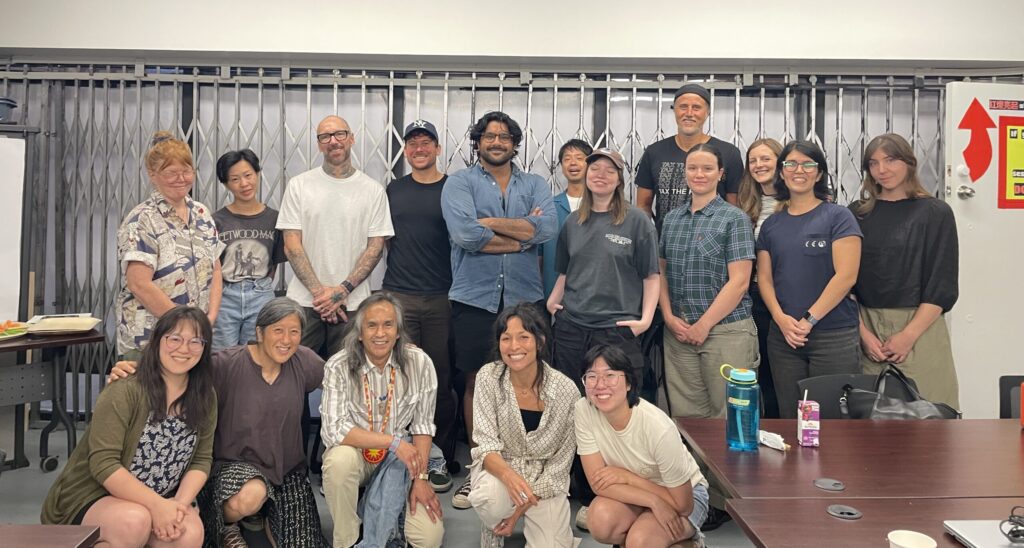
Participants from Vancouver’s Pro Forma Workshop at SRO-Collaborative Space in Vancouver’s Chinatown.
Building Power Together
At its heart, this project wasn’t just about spreadsheets and financial models. It was about building community power.
Participants didn’t just leave with new knowledge. They left with a sense of possibility—that with the right tools, their communities can take control of land, protect affordability, and shape the future of their neighborhoods. Planning an acquisition doesn’t have to be out of reach. With the right tools, communities can lead the way.
Want to learn more about our work with Community Land Trusts?
Read Our Policy Paper SeriesThanks to UBC’s Community Engagement fund for their generous lending, which made this workshop possible.
The Balanced Supply of Housing is a SSHRC-CMHC funded, community-based research project at UBC that focuses on land use and housing financialization across Vancouver, Toronto, and Montreal.