

New research from Drs. Colin Phillips and Alina McKay documents discrimination, inaccessibility, and a vicious cycle of under-enforcement that leaves people with disabilities without safe, affordable homes.
Safe, affordable, and appropriate housing is a basic human right. Yet for many Canadians living with disabilities, that right remains out of reach. A new report submitted, to the National Housing Council’s Review Panel on the Lack of Accessible Housing, by Balanced Supply of Housing researchers Drs. Colin Phillips and Alina McKay paints a sobering picture: the housing system is failing people with disabilities at every stage, when they search for a home, when they try to make their housing work for them, and when inaccessibility forces them to leave.
The research draws on Canadian and international law, national disability survey data, workshops, and an original survey of 45 people with disabilities conducted between June and July 2025. Respondents were grouped into those who own their home, those who rent from a for-profit landlord, and those who live in social affordable housing. What emerges is not a portrait of individual misfortune but of systemic failure, and a compelling case for urgent, coordinated action and reform.
Read the ReportThe Legal Framework: Rights on Paper, Gaps in Practice
Canada has obligations under Article 11 of the International Covenant on Economic, Social and Cultural Rights, which protects the right to adequate housing. The report maps these obligations across three stages of the housing journey:
- Access rights, the right to obtain housing without discrimination
- Occupancy rights, the right to live in housing that meets one’s needs
- Exit rights, the right to leave housing without undue hardship
International law further defines adequate housing to include both freedoms (such as protection against forced eviction) and entitlements (such as habitability, accessibility, and affordability). While Canada’s definition of core housing need overlaps with these standards, the report identifies significant gaps, particularly around affordability and accessibility, between what international law requires and what Canadian policy delivers.
Building codes are another critical piece of the puzzle. The report examines universal design principles and Canada’s Accessible Housing Standards and finds that voluntary approaches have not closed the gap. More robust, mandatory standards are needed.
Key Finding #1: Discrimination is Widespread, Across All Housing Types
Survey respondents reported experiencing discrimination when they applied for housing at striking rates:
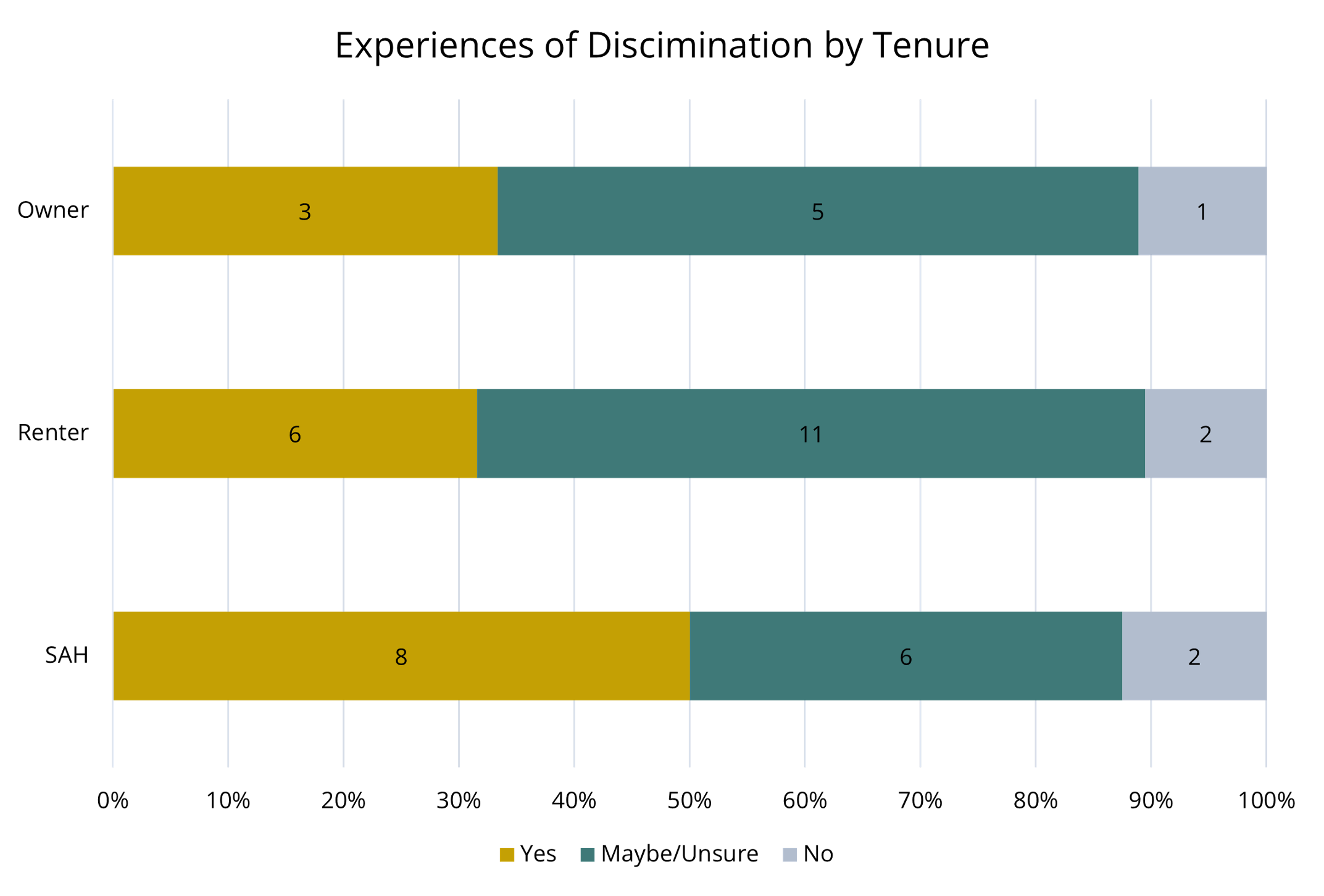
Figure 1: Share of respondents who experienced discrimination when applying for housing, by tenure type
More than half of respondents living in social and affordable housing reported experiencing discrimination during the application process. Among renters, one in three reported the same. Even owner-occupiers, often assumed to face fewer barriers, reported discrimination at a rate of 34%.
These numbers are not abstract. Respondents described being passed over for housing the moment a landlord discovered their disability:
“I overheard a realtor whispering to a colleague that ‘disabled renters are more trouble than they’re worth’ while I was waiting for a meeting. Their dismissive attitude made me feel like an outsider in the housing search process.”
“Application is stellar, credit score is excellent, good references. Once landlord realized I am Deaf, he made an excuse that he preferred to go with another candidate despite accepting my application and communication over email. Once they meet me in person or find out I am Deaf (if I had to call), they immediately lose interest.”
These accounts illustrate how discrimination operates not through overt policy, but through discretionary gatekeeping, the awkward looks, the unwillingness to entertain even the simplest of accommodations. Legal protections exist on paper; enforcement is another matter entirely.
Key Finding #2: Accessibility Modifications Remain Out of Reach
For people with disabilities who do secure housing, the challenges don’t end when they get the keys. Many need to make accessibility modifications to live safely and independently — ramps, grab bars, widened doorways, adapted kitchens. The survey reveals that the ability to make these changes is profoundly shaped by tenure.

Figure 2: Ability to implement needed accessibility modifications, by housing tenure
Not a single renter in the survey reported being able to fully implement the accessibility changes they needed. The barriers are well known: landlord approval requirements, cost, and the legal uncertainty around who is responsible for modifications and who bears the expense.
Owners fared better in relative terms but still faced substantial barriers: 45% reported being able to implement only some of the modifications they needed, and another 45% were unable to implement any changes at all. Cost and the complexity of retrofitting existing homes were commonly cited obstacles.
Why This Matters
The inability to modify one’s home isn’t merely inconvenient; it can make daily life unsafe, exacerbate health conditions, and undermine independence. When housing cannot be adapted to meet a person’s needs, the alternative is often moving, with all the disruption, cost, and trauma that entails.
Key Finding #3: Inaccessibility Forces People to Move, and Move Again
When housing cannot be made to work, people are forced out. The survey documents the extent to which inaccessibility drives involuntary moves:
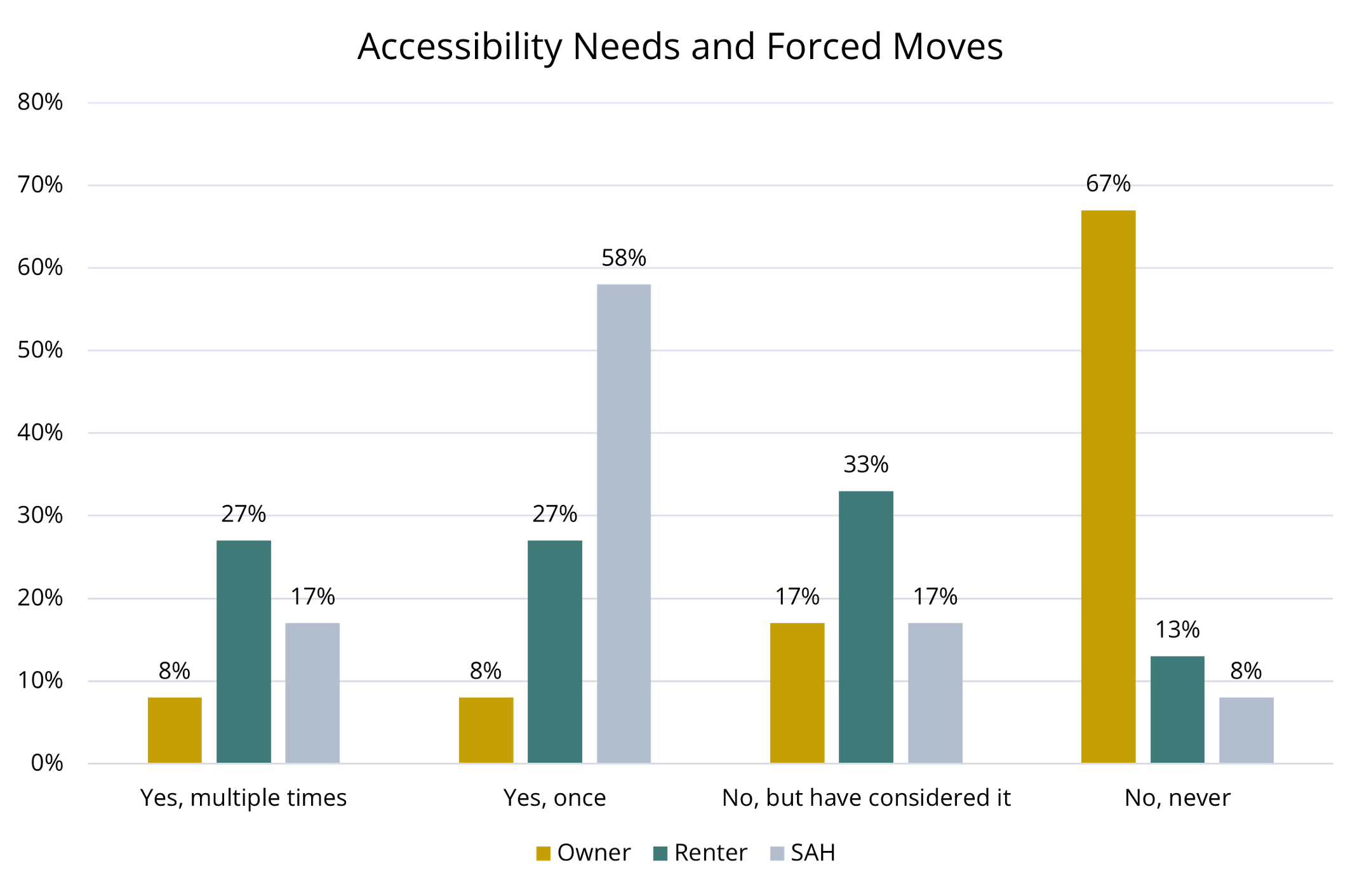
Figure 3: Share of respondents who had to move because their housing did not meet accessibility needs, by tenure
More than half of all renters in the survey had been forced to move at least once because their housing didn’t meet their accessibility needs. Among people in social and affordable housing, often the sector of last resort for people on low, fixed incomes, that figure climbed to 75%.
These are not voluntary moves made in search of something better. They are displacements driven by unmet need, in a market that offers few accessible alternatives. Each move carries costs: financial, social, and impacts on physical and mental health.
The Vicious Cycle: Under-Enforcement of Rights, Over-Enforcement of Punitive Laws
The report identifies a particularly troubling dynamic at the heart of the accessible housing crisis: a vicious cycle in which the rights of people with disabilities are chronically under-enforced, while laws that destabilize housing security, such as eviction rules and zoning restrictions, are applied with force (Michel et al., 2024).
People with disabilities who challenge discrimination or seek modifications often find complaint processes slow, complex, and inaccessible. Remedies are rare. Meanwhile, landlords can use administrative and legal tools to end tenancies, often with far greater speed and effect than the protections that are supposed to shield tenants with disabilities.
This asymmetry is not incidental. It reflects the ways that housing law has been shaped by property interests rather than human rights principles, and it underscores why reform must go beyond awareness-raising to structural change.
Recommendations: Three Domains for Action
The report’s recommendations are organized around three interconnected domains. Progress in all three is necessary—action in only one or two will leave the system broken.
1. Legal Protections
- Strengthen access rights to prevent discrimination from blocking people with disabilities from obtaining housing
- Strengthen occupancy rights, including clearer obligations on landlords to accommodate accessibility needs
- Strengthen exit rights to protect people with disabilities from disproportionate eviction risk
- Enforce existing legal frameworks and create mechanisms that are accessible, timely, and effective
2. Income Supports
- Increase income supports to close the gap between what people with disabilities can afford and what accessible housing costs
- Tie disability shelter benefits to housing costs in high-cost markets
- Fund accessible home modification programs for both renters and owners
3. Accessible Housing Supply
- Move from voluntary to mandatory accessible design standards in building codes
- Set targets and timelines for increasing the supply of accessible units in publicly funded housing programs
- Monitor progress and publish disaggregated data on accessible housing availability by tenure
Breaking the Cycle
The report calls for enforcing accessibility standards and monitoring progress as essential steps to break the vicious cycle of under-enforcement of rights and over-enforcement of punitive laws. Accountability mechanisms, not just goodwill, are required.
What Needs to Happen Now
Governments, housing providers, landlords, and the real estate industry all have a role to play. The evidence is clear: people with disabilities face significant barriers at every point in the housing system, regardless of whether they rent, own, or rely on social housing. Solutions are available; what has been missing is political will and coordinated action.
This report provides the evidentiary foundation for that action. It is a call to governments at every level to treat accessible housing not as a niche concern, but as a core human rights obligation, one that Canada has made commitments to uphold under international law.
Read the ReportAbout This Research
This blog post summarizes key findings from a report submitted to the National Housing Panel by Drs. Colin Phillips and Alina McKay of the Balanced Supply of Housing initiative. The report draws on Canadian and international law, data from the Canadian Survey on Disability, and an original survey of 45 people with disabilities conducted in June–July 2025. Questions about the research can be directed mckay@allard.ubc.ca.
The Balanced Supply of Housing (BSH) is a SSHRC-CMHC funded partnership grant led by Dr. Alexandra Flynn at UBC’s Peter A. Allard School of Law, focused on land use, housing financialization, and sustainable housing futures across Vancouver, Toronto, and Montreal.


