
Policy Report and Profile Series on Canadian Community Land Trusts
Last modified:
This national comparative research initiative resulted in a series of thematic policy reports and practitioner profiles on Community Land Trusts (CLTs) in Canada. It brought together researchers and practitioners to examine CLTs as an alternative land tenure model focused on long-term housing affordability, community governance, and land stewardship.
Jump to Research OutputsWhat are CLTs, and how do they work in Canada?
Written for popular audiences including CLT practitioners, community members, students, academics, and government officials, this project produced and disseminated a series of research papers in partnership with the Canadian Network of Community Land Trusts (CNCLT). Through this partnership, the CNCLT shaped of the themes to ensure relevance to practitioners and connected researchers to member CLTs.
Project Lead(s):
Home Organization:
University of Toronto
Other Participants:
Penny Gurstein, Kuni Kamizaki, Margaret Low, Nat Pace, Jane O’Brien Davis, Meagan Auger, Tiana Lewis
Community Partner:
Canadian Network of Community Land Trusts
Funding Stream:
Comparative Project
Project Status:
Completed
Background
While there is growing interest in CLTs as an innovative housing solution, the project responded to gaps in comparative and policy-oriented literature on how regulatory frameworks, zoning systems, and building codes influence CLT implementation and scalability in Canada. This project resulted in one policy paper tackling critical issues around CLT development and five shorter CLT profiles documenting the models of particular CLTs to CLT practitioners and policymakers across Canada.
Methodology
The project commissioned one policy paper and five practitioner profiles from researchers and practitioners across Canada, coordinated in partnership with CNCLT to ensure relevance to the CLT sector. The commissioned papers are:
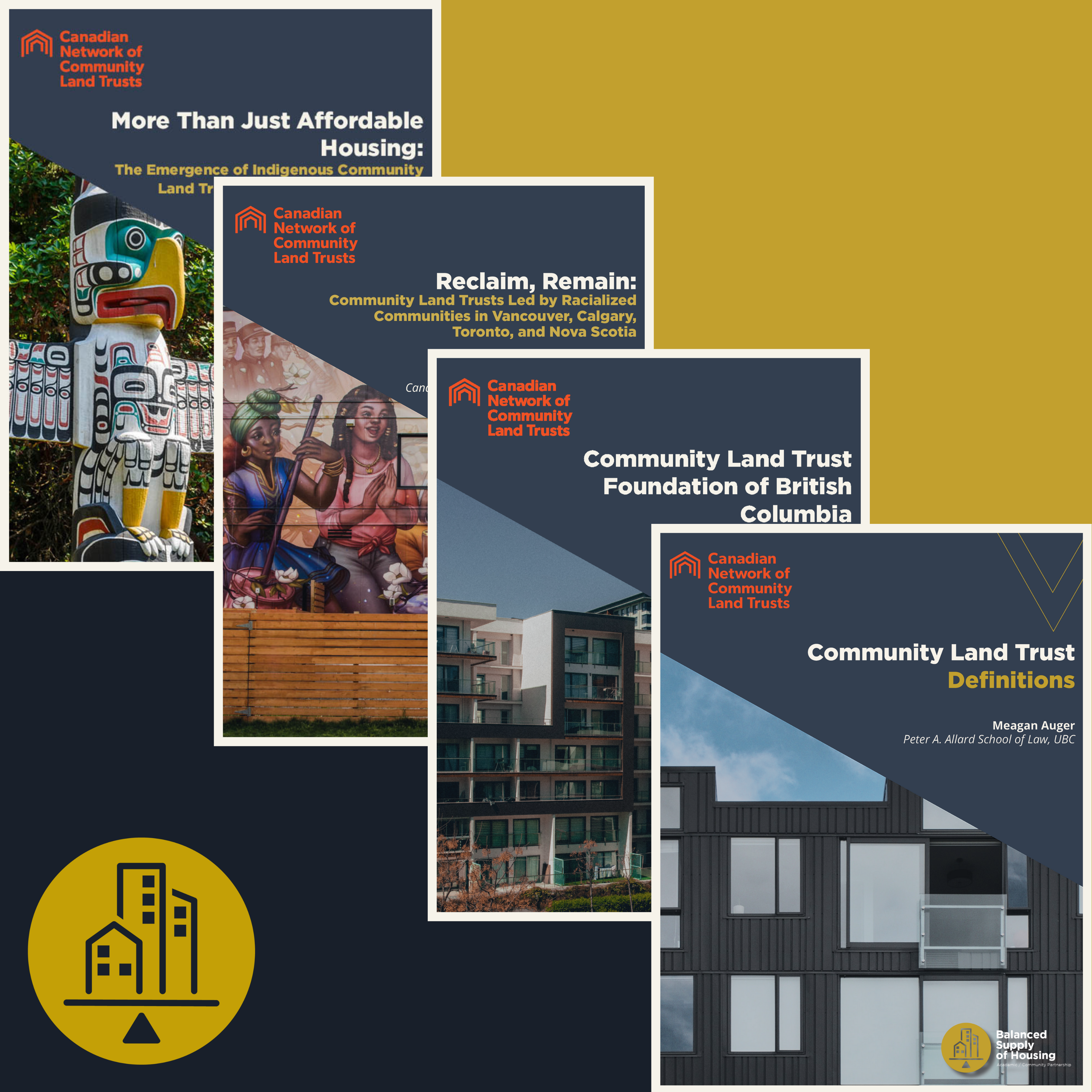
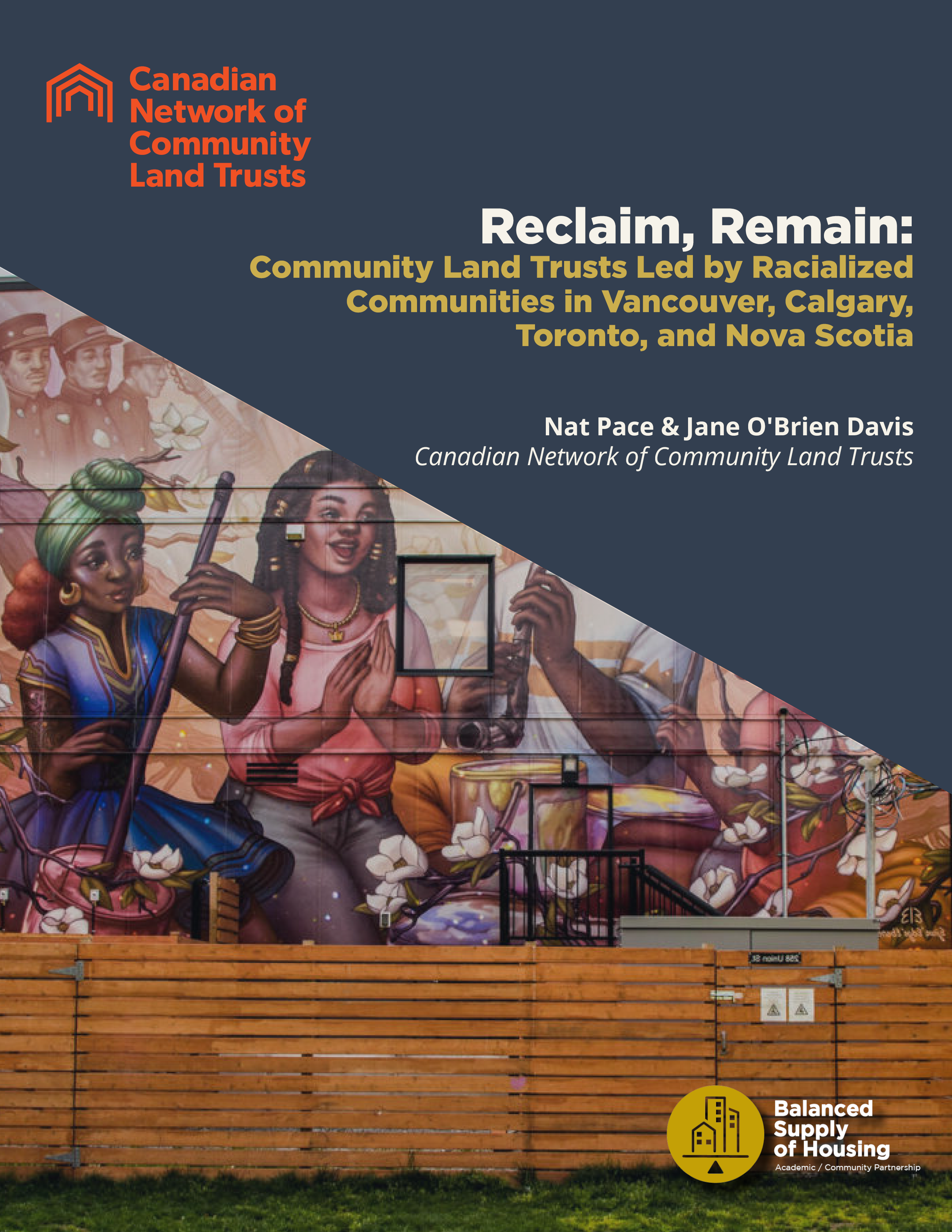
1. Reclaim, Remain (Nat Pace and Jane O’Brien Davis, Canadian Network of Community Land Trusts) offers an overview of six BIPOC-led CLTs across Vancouver, Calgary, Toronto, and Nova Scotia, documenting their early-stage organizing efforts and their pathways toward collective land stewardship and decolonized land practice.
2. CLT Definitions (Meagan Auger, J.D.) explores the legal definitions of CLTs globally and evaluates the case for establishing a legal framework for CLTs in Canada.
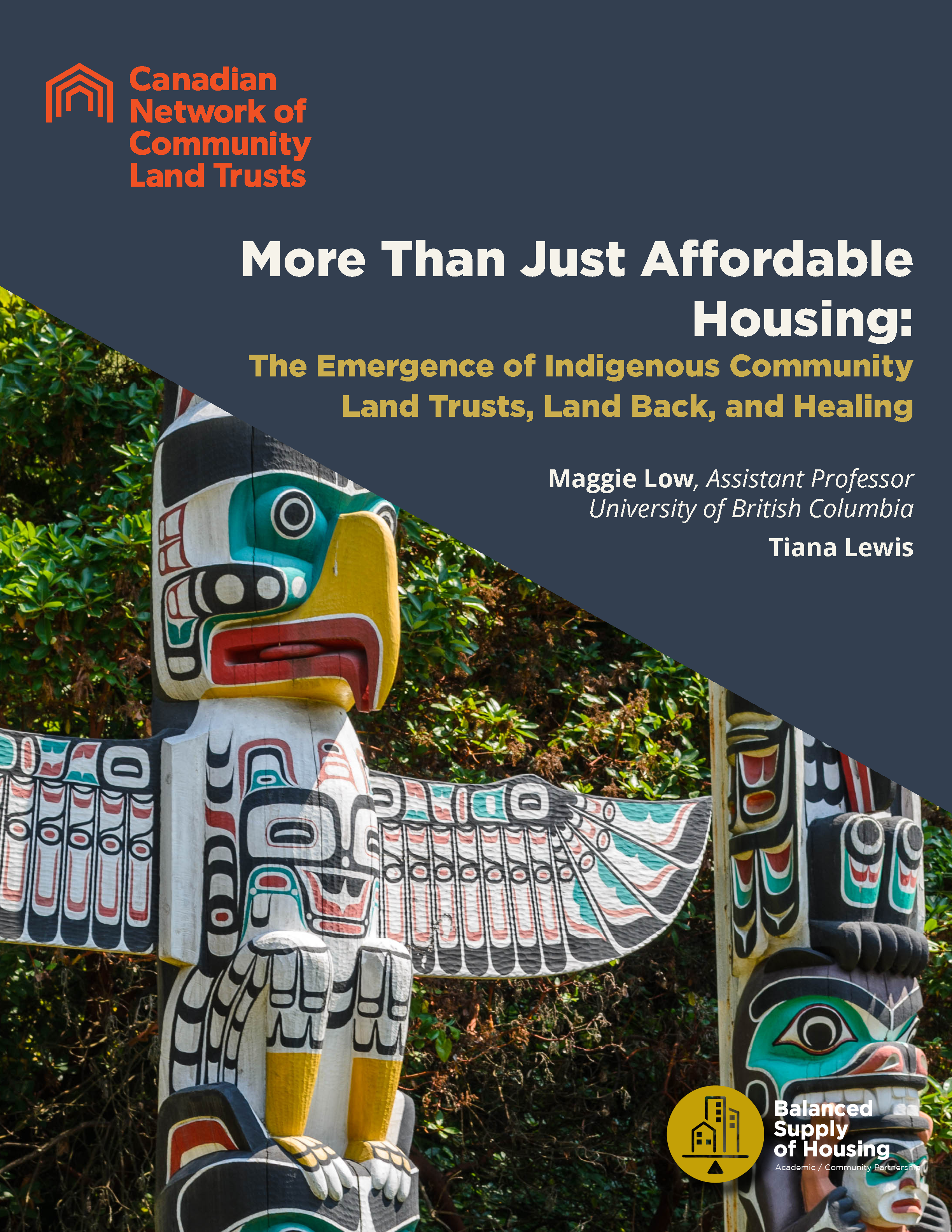
3. More Than Just Affordable Housing: The Emergence of Indigenous Community Land Trusts, Land Back, and Healing (Margaret Low and Tiana Lewis, School of Regional and Urban Planning, UBC) documents the innovations and challenges of Indigenous Community Land Trusts (ICLTs) in Canada, and how CLTs can build stronger relationships with Indigenous Nations and communities.
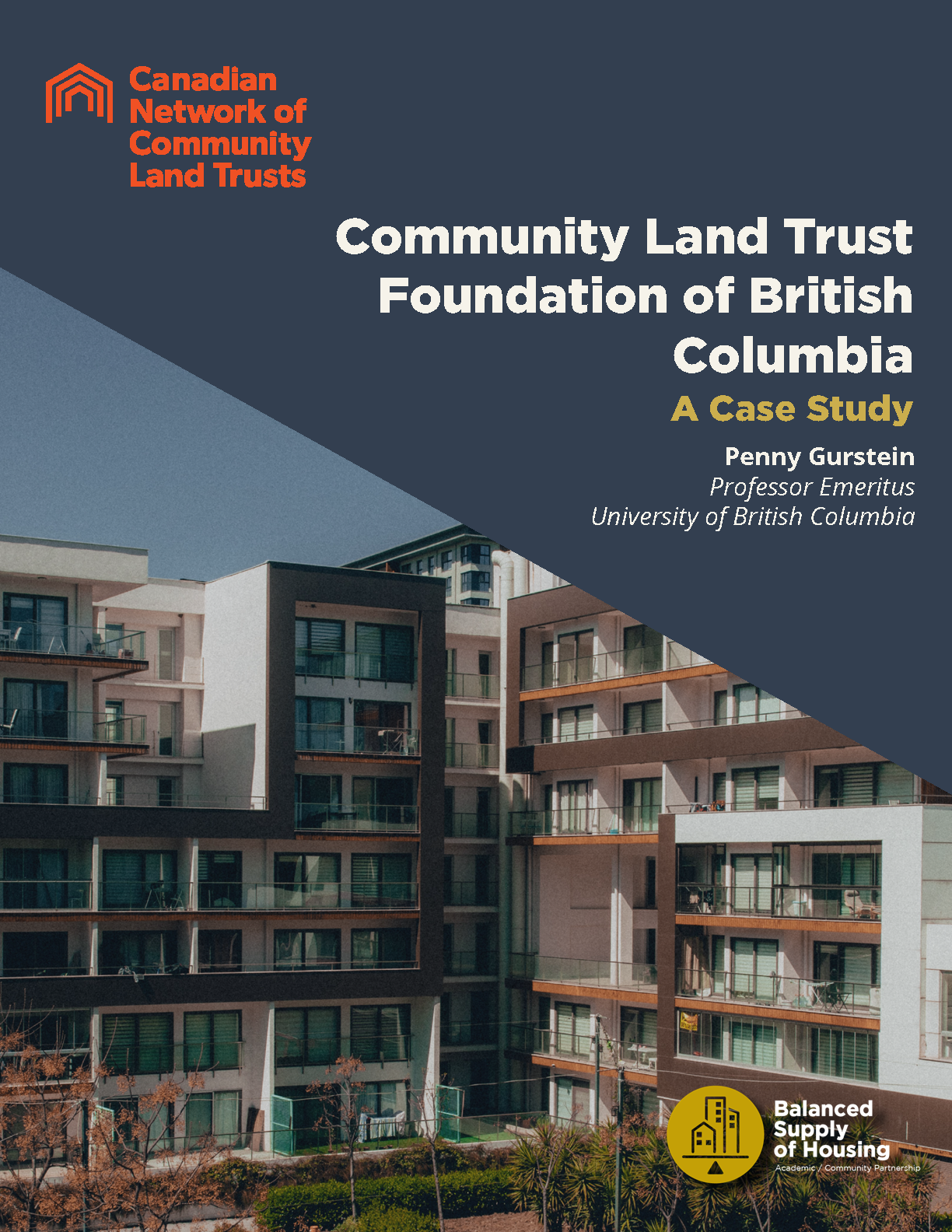
4. Community Land Trust Foundation of British Columbia (CLTFBC) Case Study (Penny Gurstein, Professor Emeritus, UBC) examines how CLTFBC’s structure and approach provide secure, community-oriented housing through cooperative housing.
5. Community Land Trusts in Canada: Responses and Resistance to Gentrification (Susannah Bunce and Emma Ezvan, School of Cities, University of Toronto) examines how CLTs resist displacement and preserve community spaces amid decades of gentrification pressure in Canadian neighbourhoods
6. A Case for Community Land Trusts in Canada: Promising Community Practices and Public Policy Options (Kuni Kamizaki, University of British Columbia) identifies the CLT model’s core advantages for permanently affordable housing and provides a policy framework for governments to implement a community-controlled approach
Results
The series documents how community land trusts are emerging and scaling across Canada. Approximately 45 CLTs now operate nationally, and more than 60% have emerged or are nearing launch within the past five years. The papers examine BIPOC-led and Indigenous CLTs, the legal definition of a CLT, resistance to gentrification, and the Community Land Trust Foundation of British Columbia’s co-op model. Together, they show CLTs as a community-controlled route to permanent affordability and land stewardship.
The series concludes with eight policy recommendations, including long-term affordability requirements in housing programs, systematic transfer of public land to CLTs, streamlined acquisition funding, and a distinct legal designation for CLTs. Outputs include six papers, podcast episodes, blog posts, a research webinar, and presentations at the CNCLT’s annual summit.
Research Outputs
Existing reports, presentation materials, podcasts, webinar recordings, and research summaries.
-
Home Ownership: Is it Still the Dream?
Learn moreOn the National Day for Truth and Reconciliation, the 2026 CLT Summit in Ottawa asked what we leave behind. This reflection outlines what it means for land, law, and housing.
-
Meeting the Moment: Truth, Reconciliation and Community Land Trusts
Learn moreOn the National Day for Truth and Reconciliation, the 2026 CLT Summit in Ottawa asked what we leave behind. This reflection outlines what it means for land, law, and housing.
-
Episode 19: When Policy Pauses Public Ownership
Podcast
Learn moreWe’ve spoken a lot about community land trusts in our podcast series, and it’s been gaining momentum in cities and towns all over Canada. Listen to this podcast as we bring you two cases from Vancouver to hear about how some policy choices are stalling some land trust projects and how these barriers can be…
-
Community Land Trusts Are Building Momentum. Here’s Why That Matters.
Learn moreMay 15th marks World CLT Day. Learn about our CLT partners’ recent strides in expanding innovative land use models to better meet the needs of their communities.
-
From the Ground Up: How Parkdale Built a Community Land Trust
Learn moreDr. Kuni Kamizaki’s Metcalf report chronicles Parkdale Neighbourhood Land Trust’s evolution from grassroots organizing to land acquisitions. Learn how this CLT used flexible funding, democratic governance, and community planning to influence Toronto policy, combat displacement, and preserve affordability—offering a practical roadmap for communities fighting gentrification and the housing crisis.
-
Episode 16: Community Land Trusts Gaining Ground
Podcast
Learn moreCommunity land trusts are gaining ground across Canada. In this episode of the Overhead, hear from two CLT leaders: Joshua Barndt from PNLT and Norm Leech from the emerging DTES CLT who share insight into scaling CLTs, policy hurdles, and reimagining community-led development.
-

From Toronto to Vancouver: Sharing Tools to Grow Community Land Trusts
Blog Post
Learn morePro Formas are a powerful tool for Community Land Trusts to understand how they can regain community ownership of land and space in their neighbourhood. Read how P/NLT’s Joshua Barndt is supporting CLTs across Canada leverage this important skill and seek better outcomes for their communities.
-
A Case for Community Land Trusts in Canada: A Summary of Promising Community Practices and Public Policy Options
Blog Post
Learn moreBSH’s report, A Case for Community Land Trusts in Canada, not only outlines key the benefits of CLTs, but offers policy recommendations to structurally shift the housing market towards a more affordable, equitable, and sustainable model. Read the key takeaways in this blog.
-
A Case for Community Land Trusts in Canada: Promising Community Practices and Public Policy Options
Report
Learn moreThis report by BSH researcher Kuni Kamizaki examines how community land trusts can transform Canada’s housing landscape. The research identifies the model’s core advantages for creating permanently affordable housing and provides a comprehensive policy framework to help governments implement this community-controlled approach.
-
Preserving a Home, Protecting a Community: How Kensington Market CLT Secured Affordable Housing
Blog Post
Learn moreRead how BSH community partner, Kensington Market Community Land Trust, is preserving affordable housing in Toronto and building community power through the CLT model.
-
Research in Progress on BIPOC CLTs and Resisting Gentrification
Research in Progress Webinar
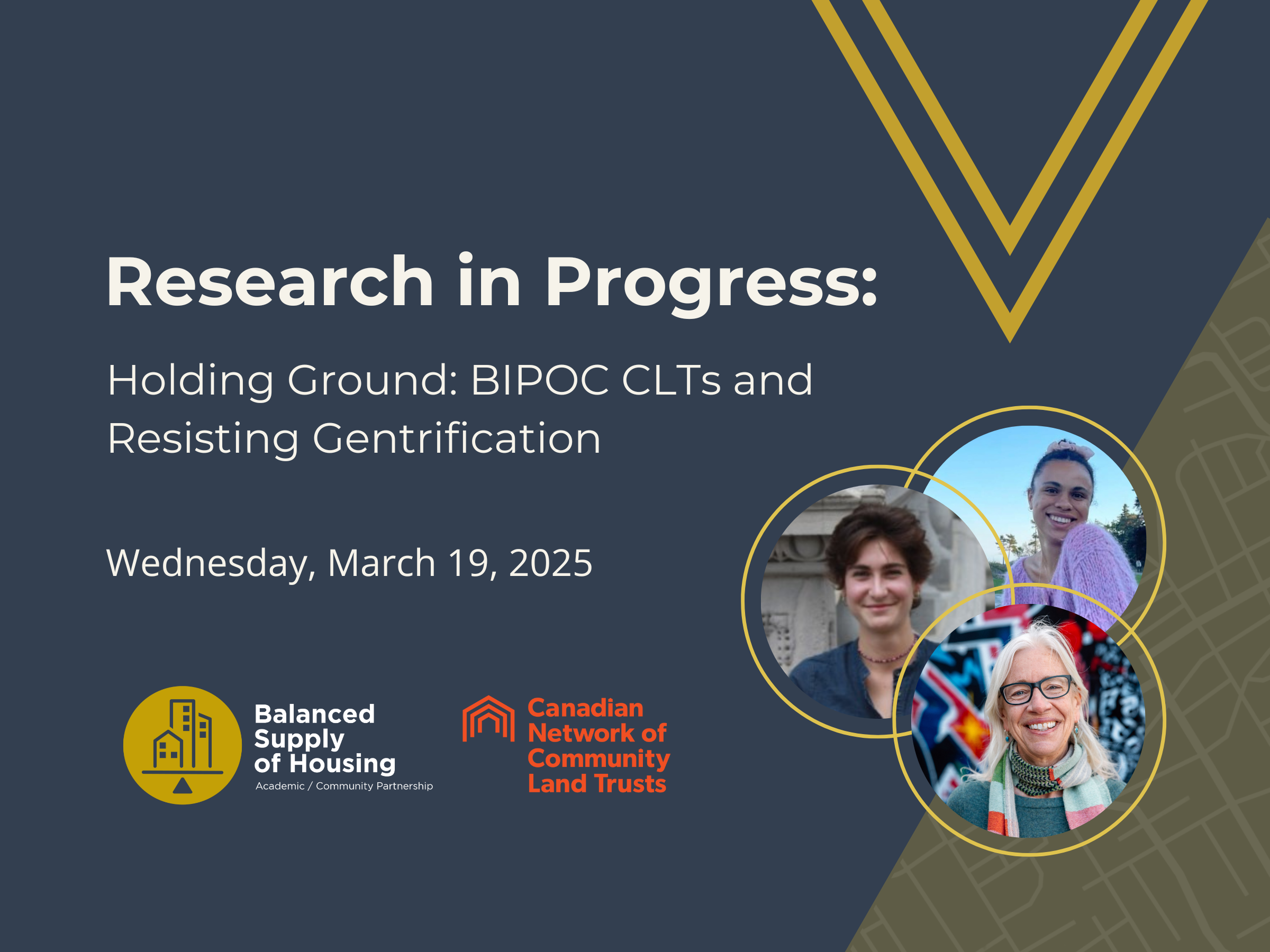
Learn moreWatch a recording of BSH’s Research in Progress webinar on BIPOC-led CLTs and Resisting Gentrification.
-
Responses and Resistance to Gentrification
Report
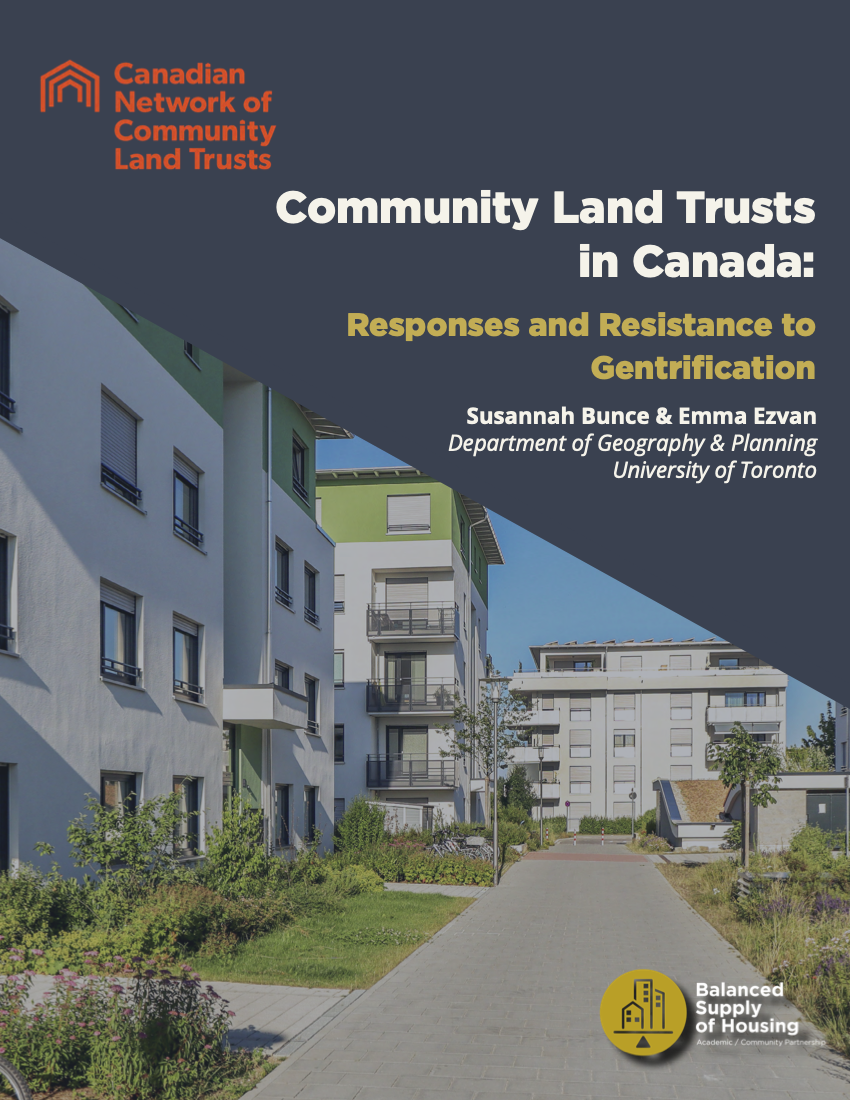
Learn moreThis report examines how Canadian Community Land Trusts (CLTs) resist gentrification by decommodifying land, promoting community ownership, and ensuring long-term affordability, countering the displacement and transformation caused by profit-driven development.
-
New Insights into Canadian Community Land Trusts: A Research Paper Series
Blog post
Learn moreDeveloped in partnership with leading academics and practitioners across Canada, this six-part series is the first of its kind and provides critical insights into the principles, practices, and challenges of CLTs in Canada.
-
Episode 9: Preserving Community
Podcast
Learn moreHow can ownership over land help preserve our diverse communities?
-
2024 CLT Summit
Summit Presentation
Learn moreFour papers from this series were presented at the 2024 CLT Summit in Vancouver.
-
Community Land Trust Foundation of British Columbia
Case Study
Learn moreThis case study aims to explore the unique structure and impact of the Vancouver-based Community Land Trust Foundation of British Columbia (CLTFBC) which leverages a community land trust (CLT) model as a tool to operate housing co-ops.
-
More Than Just Affordable Housing
Report
Learn moreThe purpose of this report is to illuminate the innovations of and challenges for Indigenous community land trusts (ICLTs) in Canada and articulate ways community land trusts (CLTs) can foster better working relationships with Indigenous Peoples, Nations, and organizations.
-
Reclaim, Remain
Report
Learn moreThis paper provides an overview of six BIPOC-led CLTs in Canada and highlights their potential for broader community impact through collective land stewardship and land use practices. Though in their early stages of organizing, these projects are trailblazing in a growing movement of sustainable and enduring communities. Written by Nat Pace and Jane O’Brien Davis…






In the News
See where BSH research has landed in the media.