Re-evaluating National Occupancy Standards
A Comparative Analysis of Housing Suitability Measures in Vancouver, British Columbia and Toronto, Ontario
Last modified:
This project compares the experiences of women+ who have experienced gender-based violence in Vancouver, British Columbia and Toronto, Ontario to better understand the impacts of occupancy standards and housing supply challenges on their ability to secure safe and affordable housing.
Jump to Research OutputsHow many bedrooms does a family need?
This mixed methods study of qualitative and quantitative data investigated how the National Occupany Standards (NOS) influence the housing options of women+ who have experienced gender-based violence in Vancouver, British Columbia and Toronto, Ontario. Building on BC Society of Transition Houses’ (BCSTH) ‘Getting Home’ project, the project aimed to ensure that changes to occupancy standards are paired with affordable housing the meets the needs of women+ and their families.
Project Lead(s):
Home Organization:
University of British Columbia
Other Participants:
Community Partner:
BC Society of Transition Houses (BCSTH)
Funding Stream:
Comparative Project
Project Status:
Completed
Background
Housing providers in British Columbia use NOS to assess housing suitability and eligibility, applying antiquated understandings of age and gender to determine the number of rooms needed for a given household. In Toronto, Ontario housing providers have adopted an occupancy limit of two people per bedroom, irrespective of age or gender. This research builds on qualitative research with women+ who have experienced gender-based violence to explore the impact that occupancy standards have on their ability to secure safe and affordable housing. By comparing the experiences of women+ in two of Canada’s most expensive housing markets the project aims to learn the role occupancy standards play in rental markets with severe supply issues, comparing wait list data from both cities to build an evidence base ensuring new affordable housing meets the needs of women+ and their families.
Methodology
First, the project conducted qualitative research through purposive sampling and interviews by telephone and Zoom to explore how the NOS impacts women who are trying to secure safe and affordable housing after fleeing domestic violence. Second, it conducted quantitative research by analyzing household-with-dependents data from the 2018 Canadian Housing Survey through a logistic regression in conjuction with a gender-based analysis lens.
Results
The project has generated a comprehensive evidence base on the impacts of occupancy standards and housing supply challenges on the ability to secure safe and affordable housing. Outputs include a Neha panel oral hearing, blog posts, policy reports, educational posters, and a podcast episode.
Research Outputs
Existing reports, presentation materials, podcasts, webinar recordings, and research summaries.
-

Rethinking Family and Space: Why Housing Standards Need to Reflect Real Lives
Learn moreWhen National Occupancy Standards are treated as rigid rules instead of guidelines, the families most in need often pay the highest price. Read how the National Occupancy Standards are shaping access to housing in ways they were never intended to.
-

National Day of Remembrance and Action on Violence Against Women 2025
Blog Post
Learn moreCanada marks December 6th by honoring the 14 women murdered at École Polytechnique in 1989 and confronting today’s intersecting crises. New reports reveal how housing insecurity and family law barriers trap survivors of gender-based violence. Key findings show coercive control, National Occupancy Standards, and unpredictable financial supports are forcing survivors to choose between homelessness and…
-

Creating a Housing System that Works for Survivors of Gender-Based Violence
Blog Post
Learn moreCanada’s housing system too often fails survivors of gender-based violence—leaving families to cycle between unsafe homes, temporary shelters, and hidden homelessness. This blog explores how Canada can reimagine housing beyond ownership, drawing lessons from Vienna’s community housing model and examining the National Housing Strategy Act’s progress toward realizing housing as a human right.
-
Transforming Canada’s Housing System: Key Insights from the Neha Panel
Blog Post
Learn moreThis blog outlines key takeaways from the 2025 Neha Panel Review dialogues with BSH’s Alexandra Flynn, Alina McKay, and Cheryll Case dig into municipal planning processes, transition housing, and constitutional rights around housing.
-
Neha Review Panel on Safe, Permanent Housing for Survivors of Gender-Based Violence
Neha Panel Oral Hearing
Learn moreThis review panel, featuring BSH Research Manager Dr. Alina McKay, examined the right to safe, adequate and affordable housing for women, Two Spirit, Trans, and gender-diverse people, and the government’s duty to uphold this right. Neha is a Kanien’kéha-Mohawk word meaning “our ways”. It describes a way of life that is open, peaceful, supportive and…
-
Building the Right Supply: Balanced Supply of Housing and BC Society of Transition Houses join the Neha Panel Oral Dialogue
Blog Post
Learn moreThe NEHA panel oral dialogue on June 20, 2025 brought critical insights and a deep sense of urgency to the conversation about gender-based violence, housing, and human rights. Their message was clear: Canada’s housing system is failing survivors of gender-based violence—and we have both the knowledge and opportunity to fix it.
-
BSH Report Finds National Occupancy Standards Act as a Barrier to Safe and Affordable Housing
Blog post
Learn moreA new report from BSH and the BC Society of Transition Houses explores the impact of National Occupancy Standards, which are often used to allocate social affordable housing in British Columbia, and how they act as a barrier to housing for women fleeing violence and their families.
-
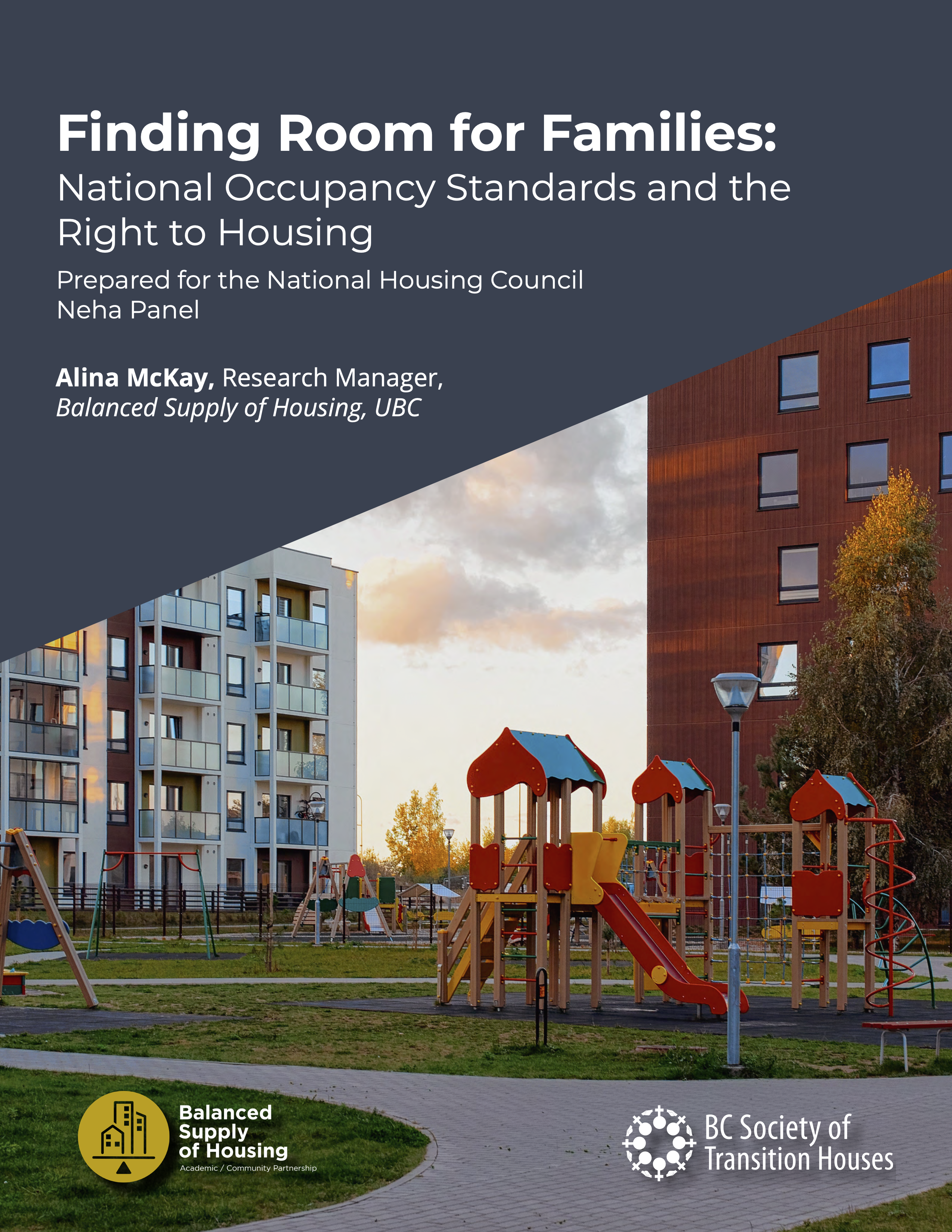
Finding Room for Families
Report
Learn moreThis report explores the impact of National Occupancy Standards, which are often used to allocate social affordable housing in British Columbia, and how they act as a barrier to housing for women fleeing violence and their families.
-
Episode 8: Women and Children Fleeing Violence
Podcast
Learn moreHow do we ensure women and children fleeing violence have a place to flee to?
-
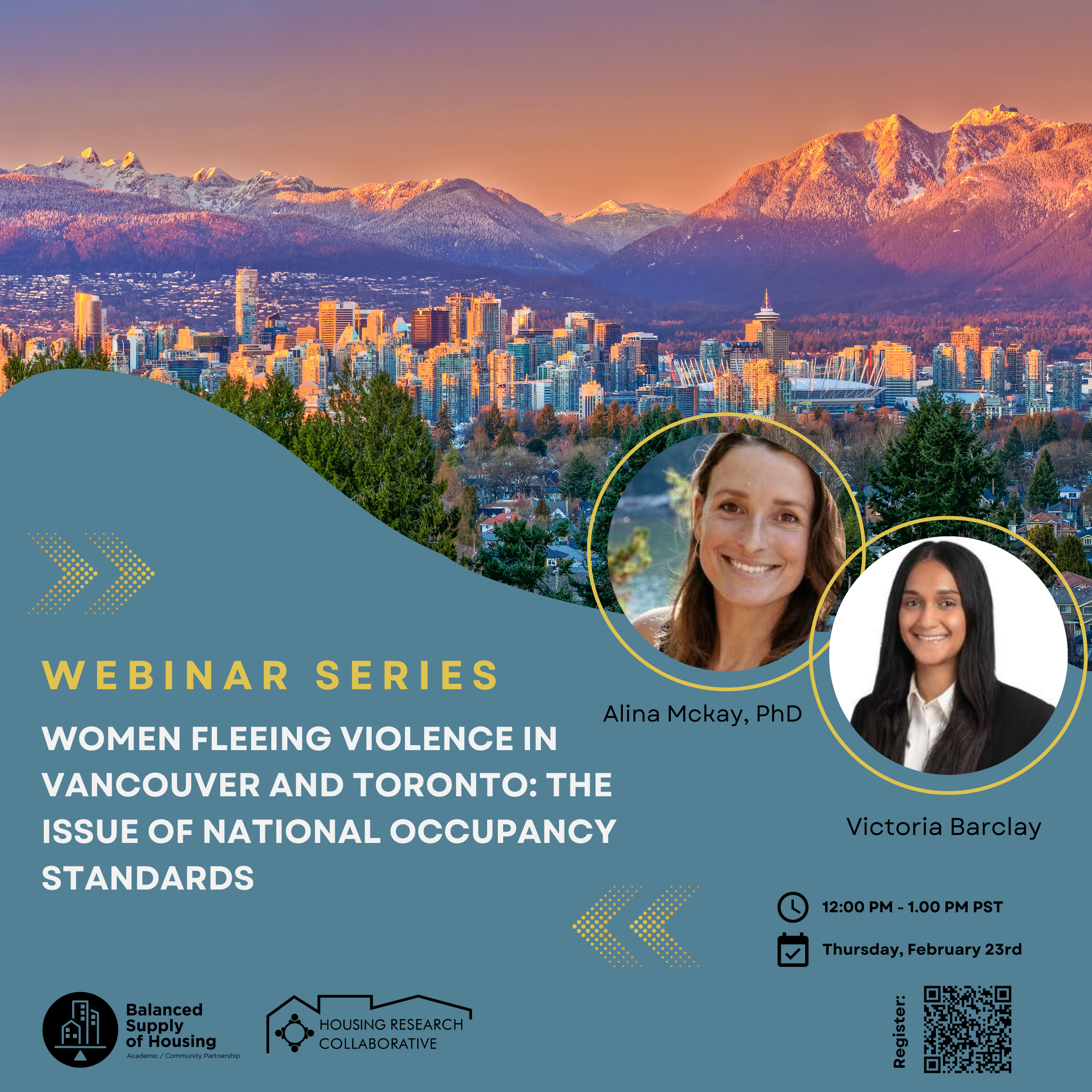
National Occupancy Standards and Women’s Housing
Research in Progress Webinar
Learn moreSpeakers:Alina McKay is a Ph.D. researcher and the research coordinator for the Housing Research Collaborative (HRC) and Balanced Supply of Housing (BSH). Her current research with the BC Society of Transition Houses explores National Occupancy Standards and their impact on women who have experienced gender-based violence. As the research coordinator for HRC/BSH she also works…
-

Poster Presentation
Poster
Learn moreView the poster summary of the report “Finding Rooms for Families.”
-
The Housing Tell
Blog post
Learn moreBC Society of Transition Houses (BCSTH) published a blog on national occupancy standards, the relationship between violence and housing precarity, and six key recommendations to support access to housing for women who have experienced violence and other disproportionally affected groups.