
Community Owned Housing in Toronto’s Chinatown
Last modified:
The Toronto Chinatown Land Trust (TCLT) seeks to better understand the role of traditional family associations in Chinatown’s current housing affordability landscape.
Jump to Research OutputsHow can community shape the housing landscape?
The Toronto Chinatown Land Trust (TCLT) seeks to better understand the role of traditional family associations in Chinatown’s current housing affordability landscape. Based on previous research, we found that community groups still owned and operated deeply affordable housing units in the neighbourhood. However, it is unclear how many housing units the family associations currently operate, the types of units, and lease arrangements. This project will examine this housing sub-form as it may represent a replicable strategy that can inform current organizing efforts that seek a culturally competent and economically inclusive solution to the housing crisis. The role of family associations in housing is not well known compared to their historic advocacy and mutual aid organizing in immigration policy, employment and cultural heritage practices.
Given the rise in interest in social finance and community wealth building as a strategy for affordable housing, the historical and contemporary role of community owned housing via family associations could serve as a major case study. This is an exploratory pilot project that will involve a community ownership census by interviewing family association leaders and members and analyzing archival documents. As a small community-action research effort, this project will help further TCLT’s capacity and catalyse its neighbourhood reach. A public-facing report will be developed for non-academic audience and will be shared with the community.
Research Outputs
Existing reports, presentation materials, podcasts, webinar recordings, and research summaries.
-
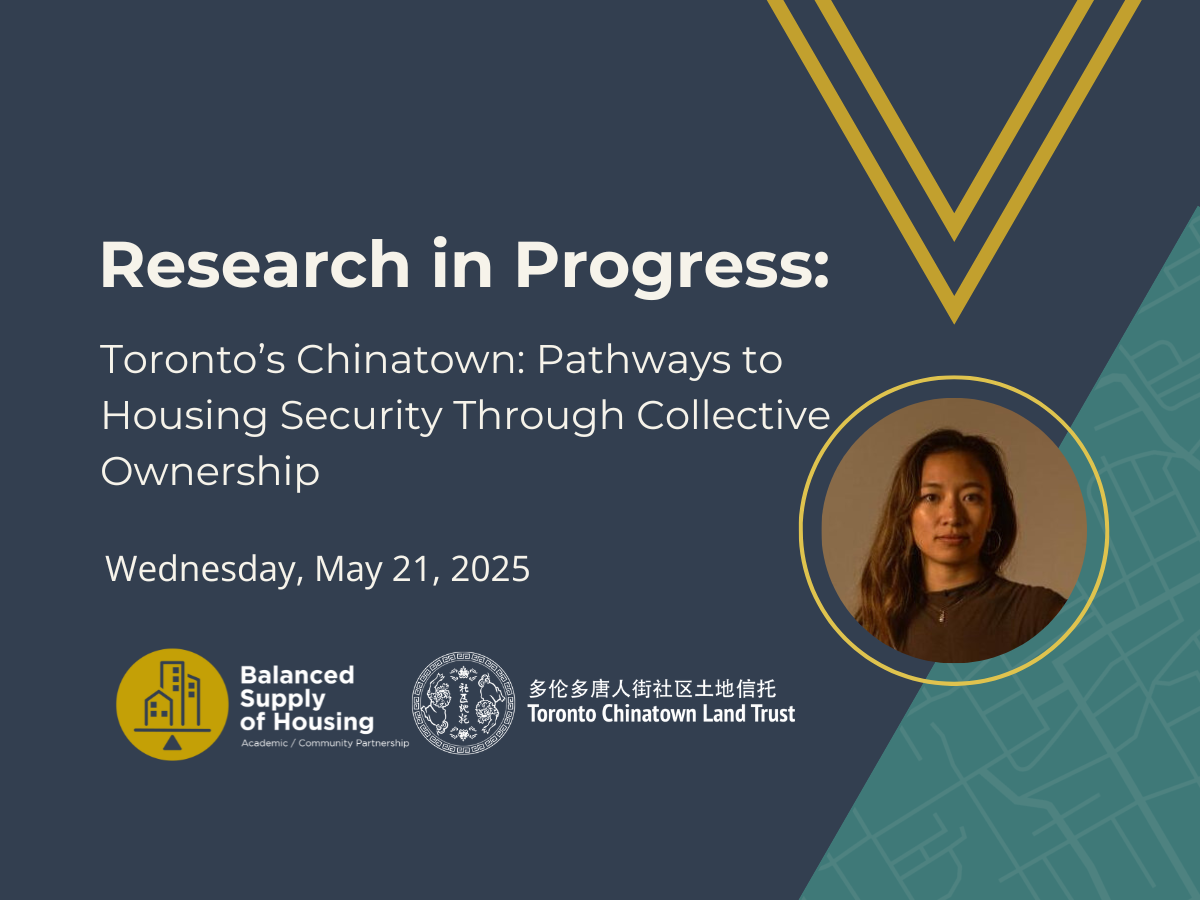
Research in Progress on Housing Security Through Collective Ownership in Toronto’s Chinatown
Research in Progress Webinar
Learn moreJoin us for a presentation on how the Community Land Trust model supports affordability, cultural heritage, and long-term community stability.
-
Episode 9: Preserving Community
Podcast
Learn moreHow can ownership over land help preserve our diverse communities?

Alert the presses!
This project hasn’t hit the news yet.