
A Call to Confront the Intersections of Housing, Justice, and Safety
December 6th, 2025 marks Canada’s National Day of Remembrance and Action on Violence Against Women; a day to honour the 14 women murdered at École Polytechnique in 1989, to acknowledge the many lives impacted by gender-based violence today, and to commit to meaningful action. This year has been particularly significant for the anti-violence, housing, and legal sectors, with new research underscoring how deeply interconnected these issues remain.
A Year of Critical Reports and Hard Truths
On November 25th, International Day for the Elimination of Violence Against Women, two major reports were released:
- The National Housing Council’s Neha Report, “We are human. We deserve a place to live. It’s that simple.”
- Rise Women’s Legal report, “Should I Have Just Stayed.”
Together, these reports paint a stark picture: Canada’s housing crisis and the limitations of the family law system are placing survivors of violence at greater risk than ever.
“Should I Have Just Stayed”: Survivors’ Voices on Housing and Justice
At the launch of Rise’s report, Staff Lawyer Haley Hrymak shared findings drawn from 90 interviews with survivors and key informants. Her research revealed a devastating pattern: the housing crisis in BC, combined with systemic barriers in the family law system, is trapping survivors in dangerous situations.
Survivors described having nowhere to go, being pushed into poverty, or being forced to remain precariously housed. For some, the choice seemed impossible, leave and face homelessness, or stay and face continued abuse.
A central theme of the report is coercive control, a form of ongoing domination that remains poorly understood or inconsistently recognized in legal settings. Housing insecurity itself was often used as a tool of coercive control, partners threatening homelessness or custody loss to force compliance and fear.
Drawing on Dr. Kim Stanton’s definition from her systemic review of the BC legal system, coercive control is a patterned campaign of fear, restriction, and resource deprivation. It includes isolating survivors from support, exploiting their financial and caregiving labour, regulating daily behaviour, and removing rights and liberties. When housing scarcity can be used to reinforce this control, the impact becomes even more dangerous.
To help address these gaps in legal understanding, Rise has also launched Rise Professional Legal Education (RPLE), a new CPD-accredited training platform for lawyers that includes training on the housing crisis and coercive control.
Barriers in Housing: The Role of National Occupancy Standards
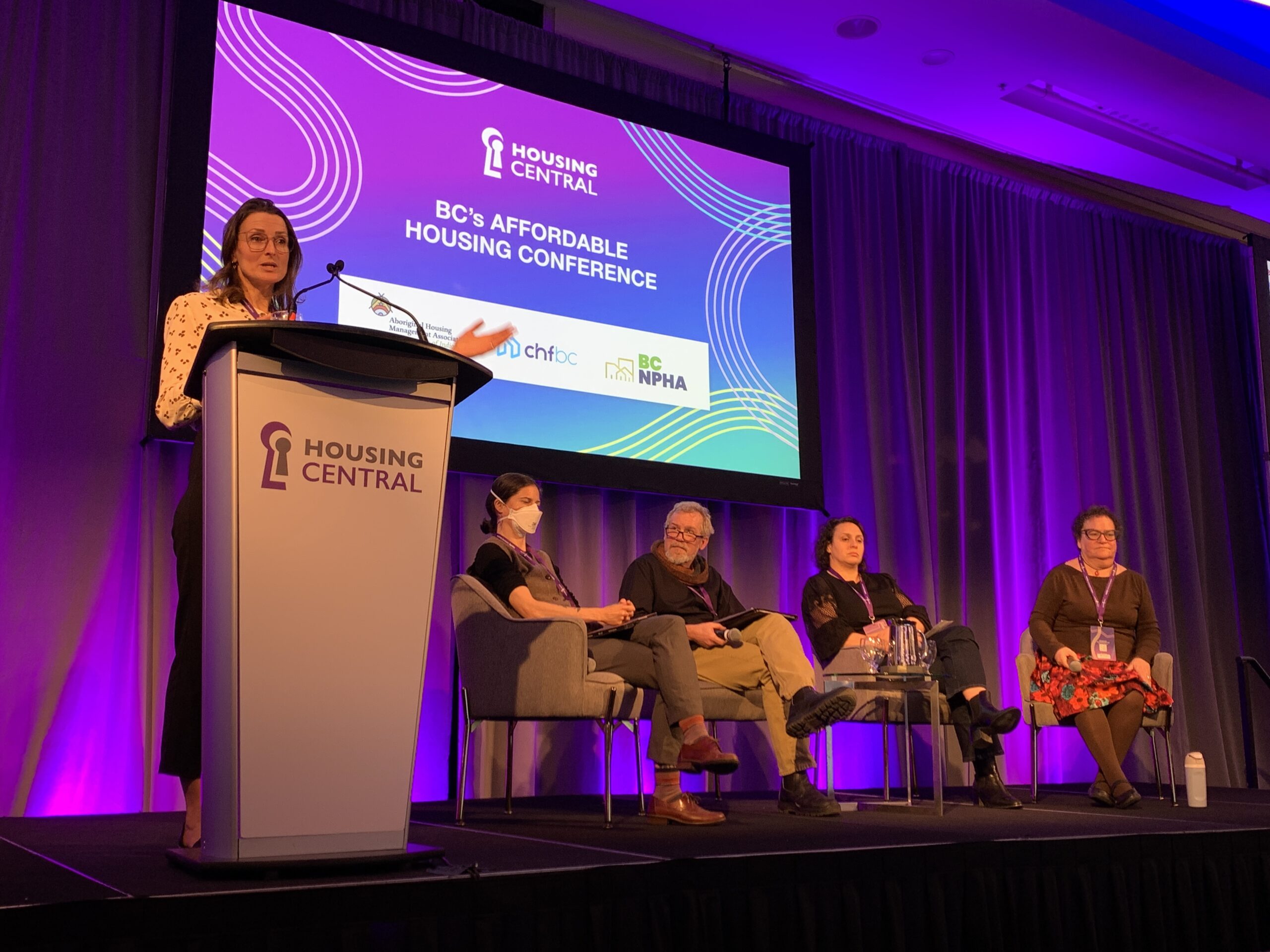
At the Rise report launch, Dr. Alina McKay, Research Manager at the Balanced Supply of Housing, spoke alongside BCSTH Executive Director Amy FitzGerald and Senior Immigration Lawyer and Mediator & Arbitrator Kamaljit Lehal.
Dr. McKay spoke about one of the most persistent barriers survivors face: the National Occupancy Standards (NOS). Although NOS were designed simply to measure housing need, many housing providers continue to use them as rigid eligibility criteria. In the midst of a housing crisis, this practice can leave women and children waiting years for units deemed “suitable” often with nowhere safe to go in the meantime.
This means survivors may be forced to return to an abusive home or may not feel able to flee at all.
The Neha Report calls for regional protection measures to prevent families from being excluded from housing due to NOS. But as advocates have emphasized, a national alternative to NOS is urgently needed to ensure consistent, survivor-centred access to housing across Canada.

Read our recent blog: Creating a Housing System that Works for Survivors of Gender-Based Violence
The Role of the Family Law System: Financial Security as Safety
The “Should I Have Just Stayed” report also highlights how the family law system can either help or hinder a survivor’s ability to leave violence. Access to reliable financial supports is often unpredictable, and that instability can be life-threatening.
One key recommendation is that Canada adopt a guaranteed child support system, in which the government pays the support entitlement upfront and then collects from the payor. This model, used in other jurisdictions, would give women and gender-diverse people greater financial stability, significantly increasing their ability to safely exit abusive relationships.
Direction for Change: Implementing Systemic Recommendations
Rise has endorsed the recommendations from Dr. Kim Stanton’s 2025 Independent Systemic Review, which outlines concrete steps to strengthen the BC legal system’s response to survivors of violence. These include:
- Creating a Court Coordinator role to help manage information across legal processes.
- Funding dedicated supports for survivors navigating the legal system, including family law.
- Establishing stable core funding for community-based anti-violence organizations across BC.
These recommendations, paired with the housing reforms proposed in the Neha Report and the insights from Rise’s research, offer a roadmap for meaningful change—if governments commit to acting on them.
A Day to Remember, A Commitment to Act
On this National Day of Remembrance and Action on Violence Against Women, we honour those who have been harmed or killed by gender-based violence. But remembrance is not enough.
Survivors need:
- access to safe, adequate housing
- a legal system that understands coercive control
- predictable financial supports
- and strong, well-funded community-based services
The conversations and research released this year make one thing clear: violence is preventable when systems support, rather than endanger, survivors.
Today, we remember. But we also recommit to safety, to justice, and to the fundamental truth in the words of the Neha Report:
We are human. We deserve a place to live. It’s that simple.
The Balanced Supply of Housing is a SSHRC-CMHC funded, community-based research project at UBC that focuses on land use and housing financialization across Vancouver, Toronto, and Montreal.